









-
A humidifier that is too small for the room runs constantly and still cannot keep up. One that is too large creates condensation on windows and humidity levels that encourage mold. Getting the size right makes all the difference, and the process is simpler than most people think.
Here is how to do it in seven steps.
How to Choose the Right Humidifier

-
Step 1: Measure the Room
Start with the square footage of the room where the humidifier will be used. Length times width. A rough estimate is fine, no need to measure down to the inch.
A small bedroom or home office under 300 sq ft falls into the small category. A larger bedroom, nursery, or family room between 300 and 500 sq ft is considered medium. An open-plan living area or studio between 500 and 1,000 sq ft is large. Anything above 1,000 sq ft requires a whole-home solution or multiple devices.
Step 2: Match Coverage to Product Rating
Humidifiers list a maximum coverage area in square footage. The unit chosen should be rated to cover at least the room's actual size. A unit rated for 300 sq ft placed in a 500 sq ft room will struggle and run nonstop. A unit rated for 1,000 sq ft in a 200 sq ft bedroom will over-humidify the space.
A good rule is to go slightly above the room's square footage, not below. A 350 sq ft rated unit for a 280 sq ft bedroom is a comfortable match.
Step 3: Factor in Home Conditions
Square footage is only the starting point. Several other factors change what a space actually needs.
Ceiling height matters because most coverage ratings assume 8-foot ceilings. Vaulted or 10-foot ceilings increase the air volume being humidified. Adding roughly 10 to 15% to the size estimate accounts for taller rooms.
Climate and season play a role, too. In very cold, dry winters, significant moisture is lost through walls and ventilation. A slightly more powerful unit keeps up better during those peak-demand months.
Drafts and air leaks are worth considering. Older homes with poor insulation lose humidity faster. If the home is drafty, sizing up is the safer choice.
Step 4: Choose the Right Type for the Room
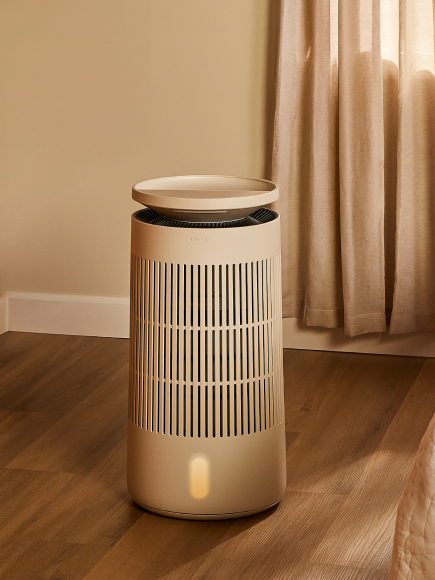
For bedrooms, ultrasonic cool mist is the best choice. Nearly silent, safe around kids and pets, and energy-efficient. For anyone who also wants air purification in the same space, the Blueair 2-in-1 Pro Purify + Humidify covers rooms up to 391 ft² with both functions in one unit using 360-degree InvisibleMist humidification and HEPASilent™ air purification.
For small rooms and nurseries, a compact cool mist humidifier under 300 sq ft capacity is sufficient. The smaller tank means more frequent refills, but the footprint fits better on a nightstand.
For a large living room or open plan, an evaporative or ultrasonic unit rated for at least 500 sq ft is necessary. Large rooms tend to have more airflow, which dries things out faster.
For the whole house, whole-home humidifiers connect directly to the HVAC system and humidify every room simultaneously. More expensive upfront, but maintenance is lower, and coverage is consistent.
Step 5: Look at Tank Size and Daily Output
Tank size determines how often refills are needed. Most bedroom humidifiers have tanks between 0.5 and 1.5 gallons. Larger units for living areas go up to 3 to 4 gallons.
More practically, moisture output in gallons per day is the number that matters most. A unit producing 1 gallon per day can maintain comfortable humidity in most average-sized bedrooms without running dry overnight. For larger spaces, aim for 2 or more gallons per day.
The Blueair 2-in-1 Pro delivers up to 60 hours of moisture from a 1-gallon tank in auto mode, which for most households means one refill every two to three days in a standard bedroom. (Runtime is based on 68 degrees F, 50% relative humidity in auto mode for a 500 sq ft room. Actual runtime varies with conditions.)
Step 6: Prioritize a Built-In Humidity Sensor
The most useful feature in any humidifier is a built-in humidity sensor with auto shut-off. Without one, guessing how much moisture is in the air risks over-humidifying the space.
The EPA recommends keeping indoor humidity between 30% and 50% to balance comfort with health. Going above 50% creates conditions that encourage dust mites and mold growth, which is the opposite of what anyone managing allergies or asthma wants. A built-in sensor keeps the room in the right range automatically. More on finding the right humidity balance for health is worth reading for anyone dealing with respiratory sensitivities.
Step 7: Factor in Maintenance Before Buying
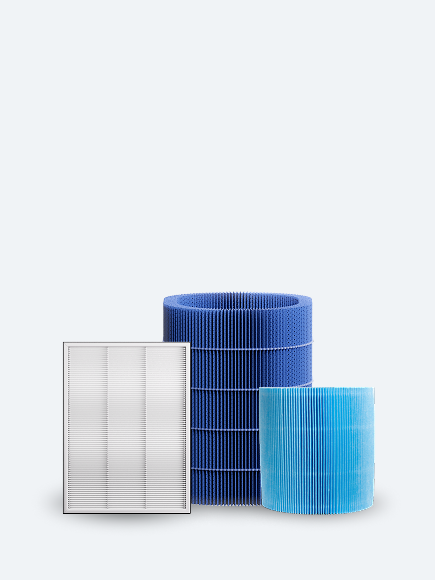
Every humidifier needs regular cleaning. Ultrasonic models need the tank cleaned every few days to prevent bacterial growth. Evaporative models need the wick replaced every 1 to 3 months. Warm mist units need regular descaling.
Before buying, check how easy the tank is to access and clean. Wide openings are significantly easier to maintain than narrow ones. Also, check the filter or wick replacement cost and availability, as those ongoing expenses add up over time.
Quick Size Reference
Room Type
Square Footage
Humidifier Capacity to Look For
Bedroom
Under 300 sq ft
200 to 300 sq ft rated
Medium room or nursery
300 to 500 sq ft
350 to 500 sq ft rated
Large living area
500 to 1,000 sq ft
600 to 1,000 sq ft rated
Open-plan or multiple rooms
1,000+ sq ft
Whole-home or multiple units
Placement Matters Too

-
Even the right-sized unit will not perform well if placed in a corner facing a wall. Position the humidifier on an elevated surface near the center of the room for the best moisture distribution. Keep the unit at least a few feet from walls, furniture, and electronics. Avoid pointing the mist directly at a bed or pillows, as concentrated moisture on fabric can encourage mold.
Getting the right size is the most important decision. Placement is the second. Getting both right delivers a noticeable difference in comfort within a few nights. For help deciding what fits a specific space, the Blueair guided selling tool walks through the key questions in about a minute.
FAQs
What size humidifier do I need for a 12x12 bedroom?
A 144 sq ft room needs a small personal or tabletop humidifier with a 0.5-1 gallon tank. Any unit rated for 200-300 sq ft will work comfortably in that space.
Is it better to get a bigger humidifier than you need?
Not necessarily. An oversized humidifier can push humidity above 60%, encouraging mold and dust mites. A unit matched to room size with an auto-shutoff at the right humidity level is the better choice.
Can one humidifier work for a whole house?
A single portable humidifier typically covers one room effectively. For whole-house coverage, a console humidifier or furnace-integrated unit works better than running multiple portables.
How do I know if my humidifier is powerful enough?
Check your indoor humidity with a hygrometer. If it stays below 35-40% after running the humidifier for several hours, your unit is likely undersized for the space.
Should I get a warm mist or cool mist humidifier for a large room?
For large rooms, cool mist evaporative humidifiers tend to distribute moisture more evenly. Warm mist units are quieter but better suited to smaller spaces.
How long does a 1-gallon humidifier tank last?
A 1-gallon tank on low to auto settings typically lasts 24-60 hours, depending on how dry the air is and how large the space is. Drier climates and larger rooms drain tanks faster.