











-
If you've been researching air purifiers, you've probably come across "ACH" or "air changes per hour." It sounds technical, but it's actually one of the most helpful ways to understand if your air purifier is working effectively for your space. Let me break down what it means and how much you actually need.
What Is Air Changes Per Hour?
Air changes per hour is simply how many times the entire volume of air in your room gets completely cleaned in one hour.
Say your bedroom has an ACH of 4 that means all the air gets cleaned 4 times per hour. If it's 2 ACH, the air is cleaned twice per hour.
Here's the important part: air purifiers don't bring in completely new outside air. Instead, they cycle through the air already in your room and clean it. So when someone mentions an air purifier delivering "4 ACH," they're talking about cleaning the room's air 4 times per hour. Sometimes this is called "equivalent ACH" or "e-ACH" same concept: how many times per hour is your air being filtered?
Why This Actually Matters
If you have low ACH, dust, pet dander, pollen, and other particles accumulate. They settle on surfaces, get stirred back up when you move around, and you end up breathing them repeatedly. With higher ACH, those particles get filtered continuously, keeping your air cleaner throughout the day.
Research backs this up. A 2025 comprehensive review analyzed 18 studies on ACH and health outcomes in homes. The findings showed that higher ACH levels were associated with fewer adverse health symptoms in six out of seven categories including asthma, allergies, respiratory infections, skin symptoms, cough, and fatigue.¹ The research notes that benefits are most pronounced when increasing ACH from very low levels (like 0.3 to 0.6), meaning homes with poor ventilation see the biggest improvements.
General ACH Recommendations
-
Here's what experts generally recommend:
Bedrooms: 4-5 ACH
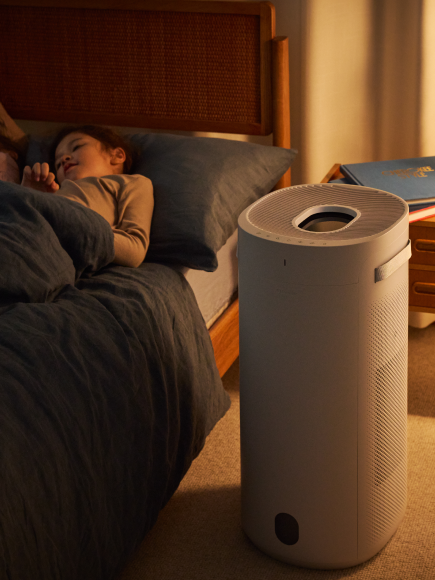
Since you spend a third of your life sleeping, this range helps prevent dust mites, pollen, and pet dander accumulation. Research shows improved sleep quality and duration when bedroom ventilation increases. The Blue Pure 311i Max delivers this effectively in medium bedrooms with quiet sleep mode, while the Blue Pure 211i Max works for larger sleeping spaces.
Living Rooms: 4-6 ACH
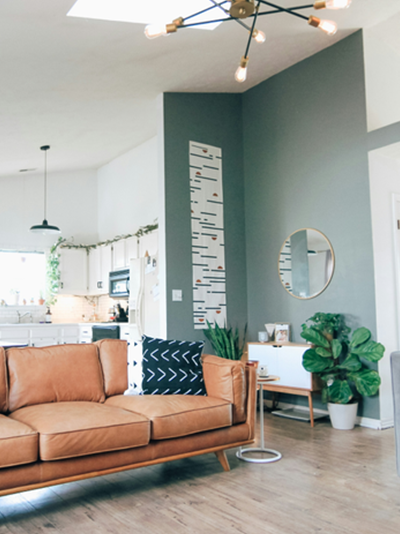
This keeps the air fresh for comfortable daily living and helps with basic allergen control. The Blue Pure 311i+ Max handles larger living spaces effectively at this level, especially with pets or allergy concerns.
Offices: 5-6 ACH
Standard guidance from ASHRAE (the American Society of Heating, Refrigerating and Air-Conditioning Engineers) for workspaces.
Schools/Classrooms: 6+ ACH
Better air quality improves student health and learning.
Bathrooms/Kitchens: 6-8 ACH
These spaces benefit from exhaust fans rather than air purifiers to handle moisture and cooking particles.
Healthcare Facilities: 12-15+ ACH
Hospital-grade air quality requires much higher standards.
How to Calculate Your Room's ACH
You need two numbers:
1. Your purifier's CFM (Cubic Feet Per Minute)
This is how much air the unit moves and cleans per minute.
2. Your room's volume in cubic feet
Measure length × width × height in feet.
The calculation:
- Multiply CFM by 60 (to get cubic feet per hour)
- Divide by room volume.
Example: A 12 ft × 12 ft × 9 ft bedroom = 1,296 cubic feet.
A unit with 250 CFM: (250 × 60) ÷ 1,296 = 11.6 ACH
Real-World Examples

-
Here's what different unit sizes deliver in actual rooms:
Small bedroom (10 × 10 × 9 ft = 900 cubic feet)
- 129 CFM unit (like the ComfortPure 3-in-1 T10i) = 8.6 ACH
- Provides good allergen control
- Great for smaller spaces that need quiet operation
Medium living room (15 × 15 × 9 ft = 2,025 cubic feet)
- 314 CFM unit (like the Blue Pure 311i Max) = 9.3 ACH
- Works well for families with pets
- Covers bedrooms and home offices effectively
Large living space (20 × 15 × 9 ft = 2,700 cubic feet)
- 450 CFM unit (like the Blue Pure 211i Max) = 10.0 ACH
- Delivers excellent cleaning
- Handles open-concept living areas
The same unit provides different ACH in different-sized rooms. A 314 CFM purifier gives 11.1 ACH in a small bedroom but only 3.7 ACH in a large living room, which is why matching the unit to your space matters.
Factors That Change Your Needs
Allergies or Asthma
Aim for 5-6 ACH minimum. Research consistently shows that better air quality directly reduces symptoms. The biggest improvements happen when increasing from very low baseline levels.
Pets
Pet dander requires 5-7 ACH. Multiple pets need higher levels.
Smokers in the Home
Tobacco smoke requires 8+ ACH for effective control.
Location
High outdoor pollution, wildfire smoke, or high pollen areas benefit from 6-8+ ACH.
Multiple People
More people mean more breathing-related air pollution. Shared living rooms need a higher ACH than single-occupant bedrooms.
Recent Illness
If someone's been sick or you're concerned about airborne viruses, 6-8+ ACH provides better protection.
What Different ACH Levels Feel Like
3-4 ACH: Basic cleaning. Dust still settles noticeably.
5-6 ACH: Good standard. The air feels noticeably fresher. Visible improvement for allergy/asthma sufferers.
7-10 ACH: Very good. Obvious air quality improvement. Excellent for sensitive people, pets, or polluted outdoor air.
12+ ACH: Exceptional. Professional-grade cleaning.
Combining Purifiers With Home Ventilation
If your home has HVAC ventilation, it's already providing some ACH. An air purifier doesn't replace it.
Example: If your HVAC provides 2 ACH and you add a purifier contributing 6 ACH, you get approximately 8 ACH total. This is ideal because you get both fresh outside air and cleaned recirculated air.
What to Aim For
Standard bedroom: 4-6 ACH
The Blue Pure 311i Max delivers this comfortably with whisper-quiet sleep mode.
Living room with family/pets: 5-8 ACH
The Blue Pure 311i+ Max targets this range and includes extra filtration for allergen control.
Allergies or asthma: 6-8+ ACH
Larger units like the Blue Pure 211i Max clean faster and more thoroughly, giving relief more quickly.
High pollution area: 8-10+ ACH
The Blue Pure 211i Max is built for aggressive air cleaning when outdoor air quality is poor.
You don't need to be exact. Hitting 5-6 ACH instead of your target 6-7 still provides excellent improvement.
FAQs
Q. Can I have too much ACH?
In homes, no higher is better for air quality. The only trade-offs are electricity use and equipment noise.
Q. Does ACH help with odors?
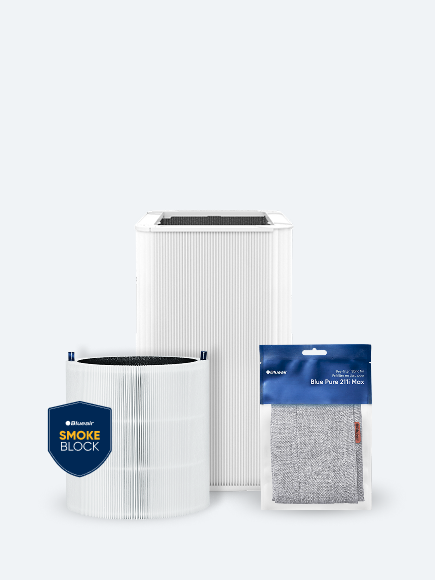
Yes. Higher ACH with activated carbon filters removes cooking smells and pet odors more effectively. All Blueair units offer upgraded filter options like SmokeBlock (for wildfires and heavy smoke) and AllergenBlock (for pollen and dander), giving you control over which pollutants matter most for your home.
Q. Should I run my purifier 24/7?
Many people do, especially in bedrooms. Continuous operation ensures consistent ACH.
Q. Can multiple purifiers work together?
Yes. Units in the same room add their ACH together. But one properly-sized unit usually performs better than two small ones.
Q. Does ACH matter without allergies?
Yes. Higher ACH reduces dust accumulation and particle buildup for everyone.
Important Usage Information
Air purifiers work best in rooms with closed doors to maintain consistent cleaning effectiveness. For indoor use only in normal environments. Do not use outdoors or in wet environments like bathrooms, laundry rooms, or pool areas.
Research
This article is based on peer-reviewed scientific research:
Laustsen et al. (2025). "Air changes per hour in residential buildings and health outcomes: a scoping review." Indoor Environments, 2(2). This comprehensive analysis of 18 studies showed higher ACH associated with fewer health symptoms, with the greatest benefits at lower baseline ventilation levels.
Memarzadeh & Xu (2012). "Role of air changes per hour in possible transmission of airborne infections." Building Simulation, 5(1). This research showed that ventilation system design and airflow patterns are critical factors in controlling airborne contaminants.
Bottom line: ACH helps you understand if your air is actually getting cleaned. Aim for 5-6 ACH as your baseline, higher if you have allergies or live in a polluted area. Better air quality genuinely makes a difference in how you feel and sleep.