











-
One air purifier can transform a single room. But figuring out how many you actually need for your whole home depends on your specific layout, room sizes, and what matters most to your family, especially when deciding if air purifiers are worth buying for long-term use.
Let's walk through the practical way to calculate this so you're not guessing or overspending.
The Simple Rule: Room Size Matters Most for Air Purifiers
Here's where most people start: measure each room where you spend significant time, bedrooms, home offices, living rooms, and nurseries. Multiply length × width to get square footage. A 15-foot by 12-foot bedroom? That's 180 square feet.
Most air purifier manufacturers list a recommended coverage area on their specifications. If your room matches that size or smaller, one unit handles it.
One thing to remember: These coverage ratings assume 8-foot ceilings. If your ceilings are higher, calculate cubic footage by multiplying square footage by ceiling height. This matters more than you'd think.
Use a room-sizing calculator to find the exact purifier you need based on your specific room dimensions.
Understanding CADR For Air Purifiers

-
CADR stands for Clean Air Delivery Rate, and it tells you how many cubic feet per minute of clean air your purifier produces. Higher CADR = faster air cleaning.
The simple formula: Divide your room's square footage by 1.5. That's your minimum CADR.
So a 300-square-foot living room needs a CADR of at least 200. A 500-square-foot bedroom needs a CADR of 330+.
Blueair's HEPASilent™ technology delivers efficient performance that means you get cleaner air faster with less energy waste, which matters when you're running a purifier all day.
Air Changes Per Hour (ACH) For Air Purifiers
This is the magic number that tells you if your purifier actually works in your space.
ACH measures how many times your purifier filters the entire room's air in one hour. Health experts recommend a minimum ACH of 4 for regular spaces, but 5+ is ideal for bedrooms and rooms with allergy or asthma sufferers.
Here's the formula: (CADR × 60) ÷ room cubic footage = ACH
Example: Your bedroom is 200 square feet with 8-foot ceilings (1,600 cubic feet). Your air purifier has a CADR of 250.
- (250 × 60) ÷ 1,600 = 9.4 air changes per hour ✓ Perfect
If your math shows ACH below 4, you have three options:
- Choose a higher CADR purifier.
- Add a second unit to the room.
- Run your purifier on a higher fan speed.
Room-by-Room Reality Check For Air Purifiers
Open Floor Plans
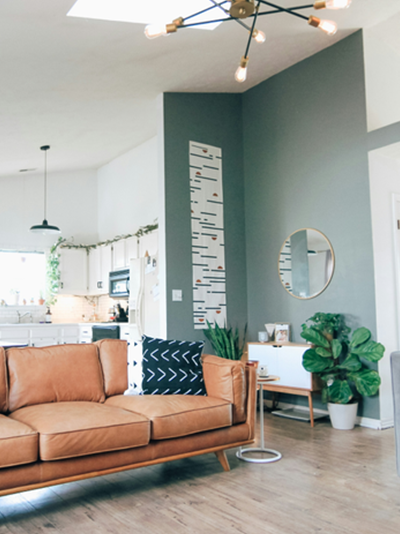
One high-capacity unit placed centrally usually works. A 600-square-foot open living-dining area typically needs just one purifier with the right CADR.
Enclosed Bedrooms & Offices
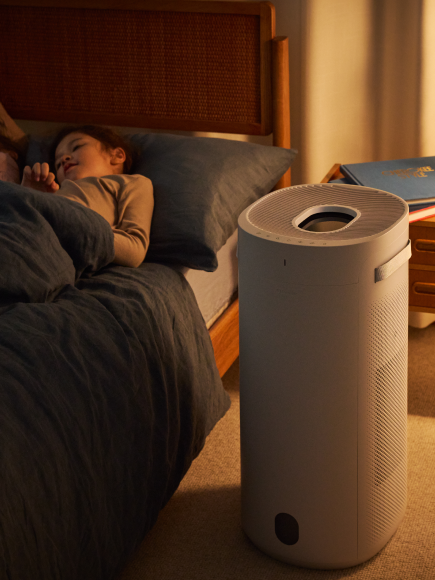
Closed doors prevent air circulation, so each room needs its own unit. People spend 6-8 hours sleeping, making bedroom air quality critical, especially for families with allergies or asthma.
Multi-Story Homes
Add at least one purifier per floor. Pollutants travel between levels through stairwells and ventilation systems.
Large Rooms or High Ceilings
Rooms over 500 square feet or with ceilings above 10 feet may need multiple units or one very high-capacity model. Browse Blueair's room-specific solutions to find the right fit.
Specific Room Recommendations For Your Air Purifier

-
Bedrooms
One purifier per bedroom keeps air clean while you sleep, when allergies often worsen. Priority: 5+ ACH.
Living Rooms
One high-capacity unit usually suffices unless the space exceeds 500 square feet.
Kitchen
A dedicated purifier removes cooking odors, smoke, and particles that range hoods miss.
Home Offices
One unit reduces headaches from poor ventilation, especially in windowless spaces.
Nurseries & Playrooms
Children are more vulnerable to air pollutants. A quiet unit protects developing lungs.
Basements
Poor ventilation + higher humidity = dedicated purifier needed.
Pet Areas
Place a unit near litter boxes or pet beds to capture dander and odors at the source.
Air Purifier For Allergies and Asthma
Households with allergies, asthma, or respiratory conditions should aim for 5+ ACH in rooms where sensitive people spend the most time. Pet owners also benefit from increased purifier capacity and pet dander requires frequent air changes.
Focus on bedrooms and main living areas first. Strategic placement there makes the biggest health difference for your family.
Making Your Air Purifier Work Effectively
Place units at least 6 inches from walls to allow proper airflow. Run on auto mode continuously air quality improves gradually through consistent operation. Position where you spend the most time (usually bedroom or living room). Replace filters according to manufacturer guidelines to maintain effectiveness.
Blueair purifiers capture 99.97% of particles down to 0.1 microns and operate efficiently, costing less to run than a standard light bulb. This makes all-day operation practical for your budget.
Get Your Air Purifier Today
The right number of air purifiers depends on your home's layout and your family's specific health needs. There's no one-size-fits-all answer, but using room size, CADR, and ACH calculations helps you make an informed decision instead of guessing.
Start with your bedroom and main living area. These are where you spend the most time breathing, and where improved air quality makes the biggest health impact. You can expand from there.
Blueair's room-sizing guide walks you through the exact calculations for your specific rooms and ceiling heights, taking the guesswork out of choosing the right purifier and the right number.
Your family deserves to breathe well at home. Use these practical tools to make that happen.
FAQs
Q. Can one purifier clean my entire house?
No. Closed doors prevent air circulation between rooms, so each enclosed space needs its own unit for effective coverage.
Q. What if I can't afford a purifier in every room?
Prioritize bedrooms first (where you spend 1/3 of your time) and your main living space. You can add more units later as your budget allows.
Q. Should I get one in every bedroom?
Ideal? Yes, especially for allergy or asthma sufferers. Realistic? At a minimum, the master bedroom and any room where someone with respiratory sensitivities sleeps.
Q. How many purifiers for a 2,000-square-foot home?
Typically 3-5, depending on layout. Open floor plans need fewer; homes with many enclosed rooms benefit from more coverage. A Blueair consultant can help calculate your specific needs.
Q. Do I need one on each floor?
Yes. Air pollutants travel between floors through stairwells and HVAC systems, so each level benefits from its own unit.
References
AHAM Verified Rating Standard: Air cleaners are AHAM Verified based on 4.8 air changes per hour according to the ANSI AHAM AC-1 standard.
EPA Guidance: Clean Air Delivery Rate (CADR) as recommended measurement for evaluating portable air cleaner effectiveness.