











-
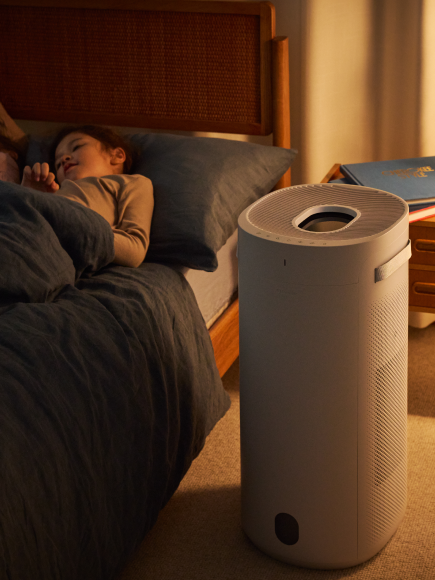
The room is dark, the pillow is cool, and sleep is close, when the air purifier kicks into high gear and jolts everything awake. A noisy purifier in the bedroom quietly chips away at rest night after night. A well-chosen, genuinely quiet bedroom air purifier can do the exact opposite: clean the air and actually help the body recover.
Why Noise Levels Matter More Than You Think
Sleep researchers consistently flag noise as one of the most disruptive factors in bedroom environments. A randomized-controlled crossover study published in the Journal of Sleep Research found that participants using an air purifier gained additional sleep time per night, with the largest benefits seen in those who already struggled to sleep. When that same device runs loudly, the machine that should help becomes the problem.
For bedroom use, most sleep experts recommend keeping ambient noise below 40 decibels (dB), roughly the volume of a quiet library. Purifiers that run louder than that on the lowest setting can interfere with sleep onset and cause more nighttime awakenings.
Noise is not just about comfort, either. A purifier that gets cranked up during the day but switched off at night because of the sound is a purifier that is not protecting anyone during the eight hours spent breathing deeply and continuously.
What Makes a Bedroom Air Purifier Truly Quiet
Not all quiet air purifiers are quiet for the same reason. A few design factors determine how much sound a unit produces.
Fan speed range. Purifiers with a wider range of fan speeds can dial down to near-silent operation without stopping filtration entirely.
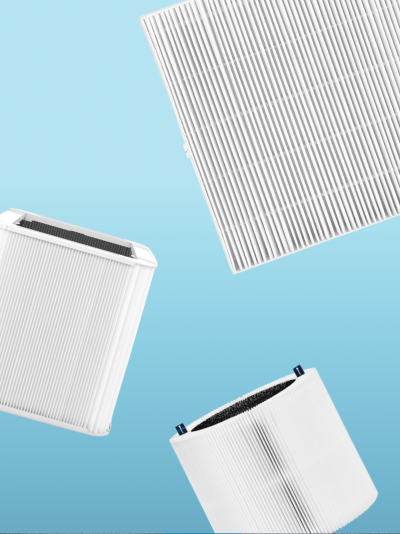
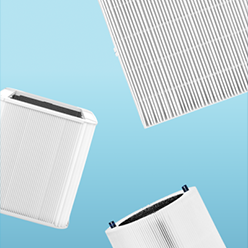
Filter resistance. Dense filters require stronger fans to push air through, creating more noise. Lower-resistance filter media let air flow more freely at the same fan speed. Blueair's HEPASilent™ technology was engineered around this principle, using a combination of mechanical and electrostatic filtration with a lower-density filter that requires significantly less fan power. The result is a purifier that captures 99.97% of airborne particles down to 0.1 microns while delivering up to 45% more clean air than typical HEPA filtration, at meaningfully lower noise levels. Multiple Blueair models carry Quiet Mark certification, an independent UK-based accreditation for whisper-quiet products.
Sleep or night mode. A dedicated low-speed setting, often paired with dimmed or disabled display lights, keeps the unit as unobtrusive as possible during the hours that matter most.
How to Choose the Right Quiet Purifier for a Bedroom

-
Match the room size to the CADR rating
A unit designed for a 150-square-foot room placed in a 350-square-foot master suite will need to run at a higher fan speed to keep up, and higher fan speeds mean more noise. Always choose a purifier rated for at least the room's actual square footage so the unit can do its job comfortably on low. A room size guide takes the guesswork out of matching.
Look for a dedicated sleep or night mode
Sleep mode is more than just a low fan speed. On quality purifiers, the mode also dims or turns off indicator lights, cuts display brightness, and often activates auto-sensing that adjusts fan speed based on real-time air quality rather than running at a fixed setting all night.
Consider the full picture of bedroom air quality
Bedroom air is not only about dust. Pet dander, pollen that drifts in through windows, volatile organic compounds (VOCs) from furniture, bedding off-gassing, and fine smoke particles all accumulate in a room where windows are closed and airflow is low. A quiet purifier that only targets large particles leaves a lot behind. Look for one that addresses the full spectrum of airborne pollutants.
Blueair Models Built for the Bedroom

-
Blueair's design philosophy centers on doing more with less. Less filter resistance means better airflow at lower speeds. Less fan strain means less noise. Less energy draw means the unit can run all night, every night, without a second thought about the electricity bill. Many Blueair models use less energy than a standard lightbulb.
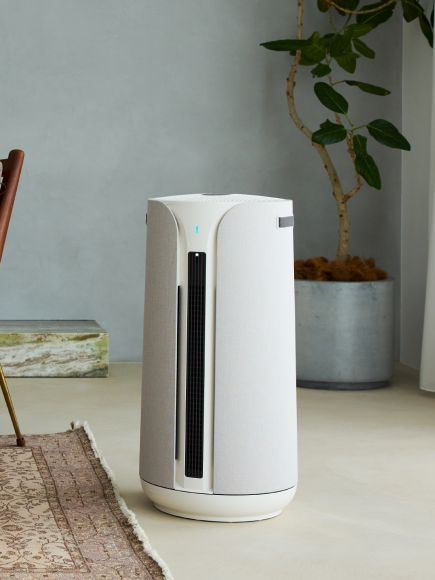
For small bedrooms, the Blue Pure 511i Max operates as low as 19 dB, well below the threshold for undisturbed sleep. For medium rooms and larger primary suites, the Blue Pure 311i Max and 311i+ Max stay below 50 dB even on their highest settings and are nearly inaudible on night mode. All three models include display shutoff so the room stays dark while the purifier runs.
A purifier designed specifically for the nightstand
The Blueair Mini Restful™ Sunrise Clock Air Purifier combines HEPASilent™ filtration with a sunrise alarm clock and soothing sounds, all in a compact nightstand form factor. QuietMark certified, the Mini Restful cleans 140 sq. ft. of bedroom air while creating a gentle, phone-free wake-up routine, without disrupting sleep overnight.
Blueair's own data on how air purifiers improve sleep quality shows consistent improvements among users who kept a purifier running in the bedroom through the night. For anyone managing allergies, asthma, or other sensitivities, Blueair's resource on air quality and health conditions offers additional context.
FAQs
What decibel level is considered quiet for a bedroom air purifier?
Most sleep specialists suggest keeping bedroom ambient noise below 40 dB. Many purifiers run between 19 and 35 dB on the lowest setting, comparable to a whisper or rustling leaves. Check the manufacturer's published dB rating at the lowest fan speed before purchasing.
Can an air purifier actually help with sleep?
Research suggests yes. Cleaner air reduces nighttime irritation from allergens, dust, and other particles that disrupt breathing and comfort. Reducing airborne pollutant exposure during the 7 to 8 hours spent in bed can improve both the quality and continuity of rest.
Should a bedroom air purifier run all night?
Running a purifier through the night is the recommended approach, since those are the most continuous hours spent in one room. Blueair purifiers use less energy than a lightbulb, so overnight operation adds minimal cost while maximizing the time spent breathing cleaner air.
How often should a bedroom purifier filter be changed?
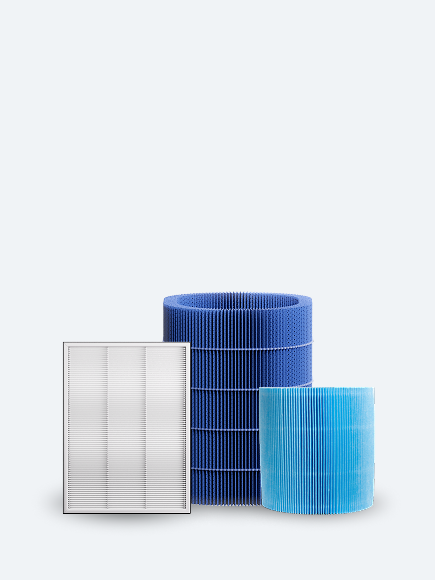
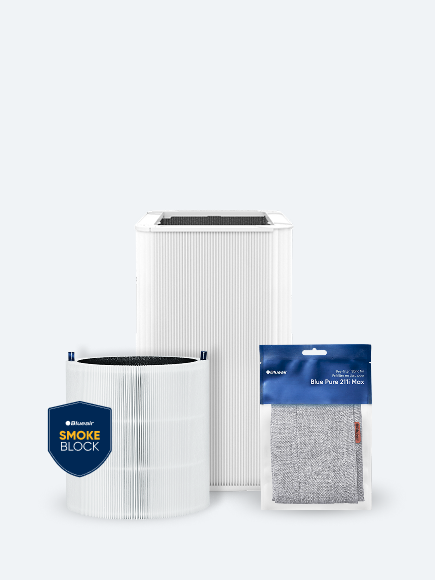
Most Blueair filters should be replaced every 6 to 9 months. After installing a new filter, press and hold the fan speed button for 15 seconds to reset the indicator. A filter subscription saves 15% on every replacement and delivers automatically. Model-specific instructions are at Blueair support.
Does a bedroom need a different purifier than other rooms?
Bedroom purifiers benefit from a few specific features: sleep or night mode, low noise at minimum fan speed, display shutoff, and a CADR rating sized for the room. A general-purpose purifier rated for a large living room may run unnecessarily loud in a bedroom. Choosing a unit sized and designed for the space gives the best balance of quiet and effectiveness.