













-
Key Takeaways
- Match the device to the problem. Air purifiers handle airborne particles, humidifiers add moisture to dry air, and air fresheners add fragrance to a room
- Devices supplement the basics. The EPA calls removing pollution sources usually the most effective step and treats air filtration as a supplement to source control and ventilation.
- Size a purifier by CADR. The EPA and AHAM recommend a smoke CADR of at least two-thirds of the room's square footage.
- Aim for 30% to 50% humidity. The EPA advises keeping indoor humidity below 60%, ideally in that range, which is the target for both humidifiers and dehumidifiers.
Indoor Air Quality and the Devices That Improve It
There are many signs that indoor air needs attention: a scratchy throat, dust settling on a shelf soon after cleaning, a bedroom that smells stale in the morning. Americans spend about 90% of their time indoors and some pollutants are often two to five times more concentrated indoors than outside, according to the EPA. Choosing the right air wellness product can be overwhelming, since air purifiers, humidifiers, monitors, and fans all promise healthier air. Each one solves a different problem, so matching the device to the symptom narrows the decision down.

-
Diagnose the Problem Before Choosing a Device
The EPA lists three strategies for improving indoor air: source control, ventilation, and air cleaning. It recommends using the three together. Removing the source and ventilation can be as simple as switching to fragrance-free cleaning products, opening windows, or running a kitchen exhaust fan. Devices cover the gap these two steps leave, especially in winter when windows stay shut and in rooms where people sleep.
Air Purifiers for Dust, Pollen, Pet Dander, and Smoke
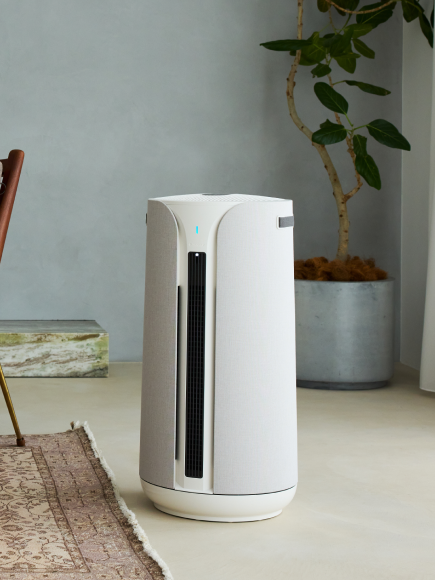
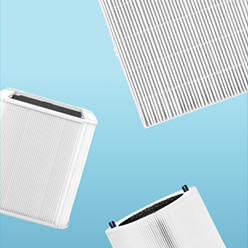
An air purifier filters indoor air to capture airborne particles such as dust, pollen, pet dander, and smoke. Many purifiers also add an activated carbon layer for odors as well. When searching for an air purifier, individuals should first look at the Clean Air Delivery Rate (CADR), which AHAM defines as how fast a purifier filters smoke, dust, and pollen. The EPA and AHAM both recommend a smoke CADR of at least two-thirds of the room's area, so a 300 sq ft bedroom suggests a smoke CADR of 200 or more. The next element that matters is filtration. A HEPA filter can remove at least 99.97% of particles at 0.3 microns. Blueair's HEPASilent™ technology combines electrostatic and mechanical filtration to capture fine particles while running quietly. Air purifiers with built-in particle sensors are also important. They let an air purifier adjust its fan speed in line with air quality changes.
Blueair Air Purifiers by Room Size
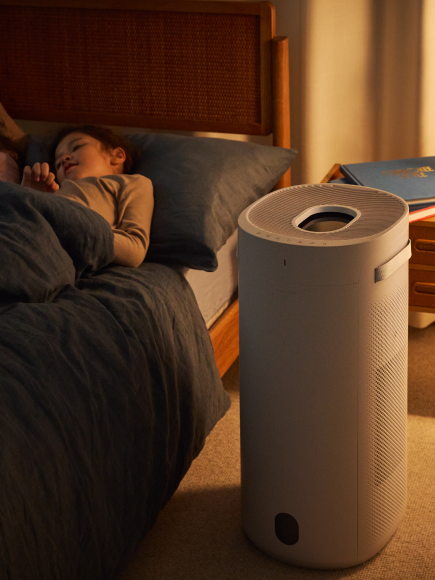
The Blue Pure 211i Max is recommended for large living spaces. The Blue Pure 511i Max is recommended for bedrooms and home offices of around 237 sq ft. Homes where odors are the bigger concern can look to Blue Signature™, which pairs HEPASilent™ filtration with OdorFence Technology™.
Humidifiers for Dry Air, Dry Skin, and Winter Heating
Heating systems dry out indoor air through the winter, and the EPA advises keeping indoor humidity below 60%, ideally between 30% and 50%. Below that range, individuals can experience skin dryness and static build up. A humidifier adds moisture back, and a built-in humidity sensor keeps it from making the room too humid.
For a bedroom, look for a tank big enough to run through the night without a refill. The InvisibleMist™ Humidifier adds moisture with no visible mist and adjusts its output with a real-time humidity sensor, covering rooms up to 500 sq ft. For bedrooms, the DreamWell™ Humidifier holds 1 gallon, runs for up to 48 hours in auto mode, and operates at 20 to 40 dB.
Blueair Humidifiers for Dry Air
Dry winter air and closed-window allergens tend to show up in the same months. The 2-in-1 Pro Purify + Humidify combines HEPASilent™ purification with InvisibleMist™ humidification in one unit for rooms around 391 sq ft, and includes a Smart Skin Mode co-created with dermatologists. Blueair's comparison of air purifiers and humidifiers covers when each one is the better fit on its own.
Other air care products: Air Quality Monitors, Air Fresheners, and Fans
Depending on the model, an indoor air quality monitor can track particulate matter, carbon dioxide, volatile organic compounds (VOCs), temperature, and humidity. Air quality monitors are used best for comparison. Measuring before, during, and after activities like cooking or cleaning can determine how much these actions impact air quality. Smart air purifiers like the Blue Pure 211i Max monitors PM1, PM2.5, and PM10 and adjusts its fan speed to match, creating consistent air quality.
Air fresheners can help freshen a room. Ventilation or filtration may be more impactful for odors that keep returning. Removing an odor means removing its source or capturing its particles and gases. Ventilation clears cooking smells fastest, and an air purifier with an activated carbon layer captures odor-causing gases between airings. Blue Signature™ purifiers add OdorFence Technology™ for homes where pet, cooking, or smoke odors linger.
A fan moves air for cooling and circulation, and the CDC notes that fans improve air mixing within a room. Choosing the right bedroom fan comes down to noise and light. The CoolDrift™ Air Circulator Fan runs as quietly as 15 dB on its lowest setting, uses 3D oscillation to move air across the room, and has a zero-glow display for sleep. For filtration and airflow from one unit, the ComfortPure™ 3-in-1 Air Purifier purifies, heats, and delivers cooling airflow.
Quick Match: Which Device Fits Which Problem