











-
Air purifiers have been around for decades, but misinformation still shapes how most people think about them. Some believe air purifiers are unnecessary luxuries. Others assume all models work the same way. Getting the facts straight saves money, avoids frustration, and helps families make choices that genuinely improve the air at home.
The Truth Behind Common Air Purifier Myths

-
Sorting through conflicting claims online can feel overwhelming. Here are five of the most persistent air purifier myths, and the reality behind each one.
Myth 1: Air Purifiers Are Just Expensive Fans
The idea that an air purifier does nothing more than circulate air is one of the most common misconceptions. A fan moves air. An air purifier moves air through a filtration system that physically captures particles.
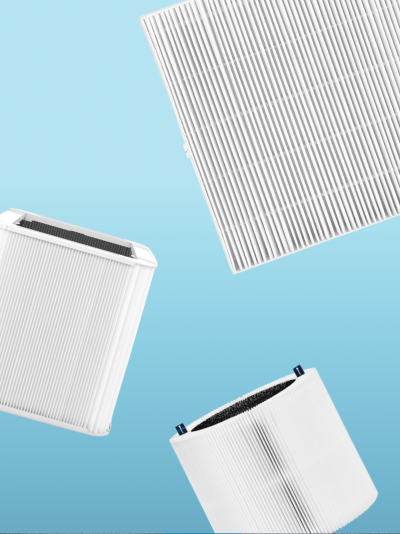
Units with HEPASilent™ technology combine electrostatic and mechanical filtration to remove 99.97% of airborne particles down to 0.1 microns. Pollen, dust mite waste, pet dander, bacteria, and smoke particles are all trapped before the air returns to the room. A fan cannot do any of that. Understanding how filtration performance is measured through CADR ratings makes the difference between a fan and a purifier easy to quantify.
Myth 2: Air Purifiers Remove All Pollutants
No air purifier removes 100% of every pollutant from a home. Air purifiers are highly effective at capturing airborne particles, but they do not address pollutants that have already settled onto surfaces. Dust on shelves, mold growing on walls, and allergens embedded in carpets require cleaning, not just filtration.
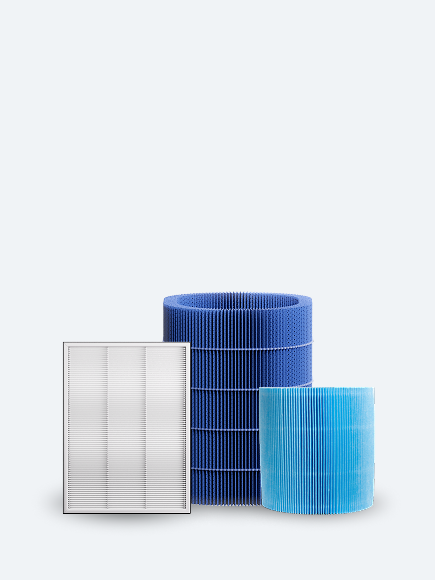
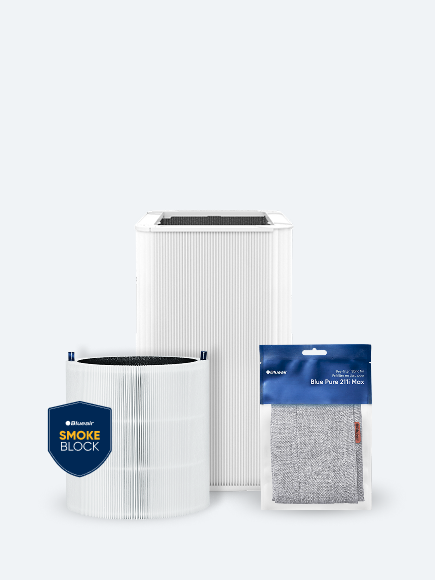
Air purifiers also vary in their ability to handle gases and volatile organic compounds (VOCs). Models with activated carbon filters handle odors and some chemical vapors, while basic particle-only models do not. Choosing a unit with filters designed for specific concerns like smoke or allergens ensures the right pollutants are being targeted. A deeper look at VOCs, odors, and gases explains which filter types address which pollutant categories.
The realistic expectation: an air purifier dramatically reduces airborne pollutant levels, which is where the majority of respiratory exposure occurs.
Myth 3: Air Purifiers Produce Harmful Ozone
Certain types of air cleaning technologies, specifically ionizers and ozone generators marketed as "air purifiers," can produce ozone as a byproduct. Ozone at ground level is a respiratory irritant and a legitimate concern.
However, filter-based air purifiers using mechanical and electrostatic filtration do not generate ozone. Blueair products carry CARB (California Air Resources Board) Zero Ozone certification, producing less than 5 parts per billion, well below any safety threshold. According to the California Air Resources Board, consumers should look for units that have been tested and certified for low ozone emissions. A compact air purifier certified for safe ozone levels runs safely around children, pets, and sensitive individuals around the clock.
Myth 4: Running an Air Purifier All Day Wastes Energy
Leaving an air purifier on continuously sounds expensive, but modern units consume remarkably little power. A budget-friendly air purifier for small rooms running on its lowest setting uses as little as 2W, roughly the same as a phone charger. Even the highest-performing models for large spaces max out around 46W on high speed.
Running a purifier 24/7 on auto or night mode typically costs less than $15 per year in electricity. The real energy waste comes from turning a purifier off and on repeatedly, since the unit then has to work harder to re-clean the accumulated pollutants each time.
Myth 5: All Air Purifiers Work the Same
Filtration technology, fan design, filter quality, and CADR ratings vary enormously between brands and models. An inexpensive unit with a thin, loosely packed filter and a weak fan delivers very different results from a unit with multi-layer filtration, strong airflow, and third-party verified performance.
Key differentiators to look for include AHAM Verifide CADR ratings for independent performance verification, noise levels certified by organizations like Quiet Mark, Energy Star certification for efficient operation, and filter options tailored to specific concerns such as allergens, smoke, or general particles. Matching the right purifier to the room's square footage is just as important as the technology inside.
How Effective Are Air Purifiers, Really?

-
When properly sized for the room and running continuously, air purifiers are genuinely effective. Models with real-time air quality monitoring provide visible proof, showing PM2.5 readings dropping as the unit works.
Clinical and laboratory testing consistently show that air purifiers with certified HEPASilent™ filtration reduce indoor particulate matter significantly. The key to effectiveness is matching the unit to the room size, replacing filters on schedule, and keeping the purifier running. For anyone unsure where to start, a guided quiz can match specific room conditions and health concerns to the right model.
The Air at Home Deserves an Honest Look
Myths persist because air quality is invisible. Nobody can see pollen counts dropping or dust mite particles getting trapped in a filter. But the effects, fewer allergy symptoms, better sleep, and less dust on surfaces, are noticeable within days. Getting past the myths is the first step toward actually breathing easier. Take a closer look at what the air in each room needs, and the right solution becomes obvious.
Frequently Asked Questions
Do air purifiers actually work for allergies?
Yes. Air purifiers with certified filtration technology capture common airborne allergens, including pollen, dust mite waste, pet dander, and mold spores. Running one continuously in the bedroom provides the most noticeable allergy relief. More on how air purifiers support dust and allergy management covers the specifics.
Are air purifiers safe for babies?
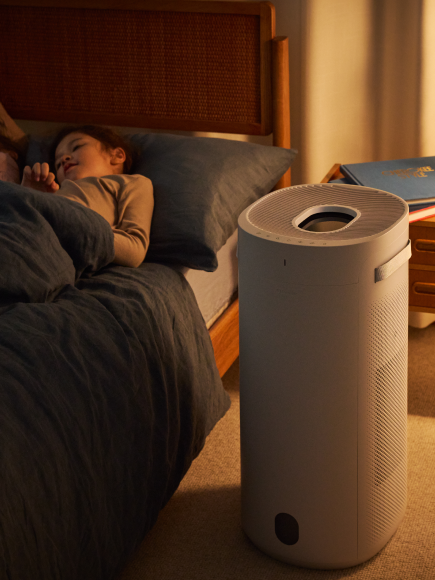
Filter-based air purifiers are safe for nurseries. Models with zero-ozone certification, child lock features, and low noise output are specifically suited for infant rooms. Guidance on air quality in children's spaces covers what to look for.
Do air purifiers remove viruses?
Air purifiers with HEPASilent™ filtration capture particles down to 0.1 microns, which includes many virus-carrying aerosol droplets. Air purification is one layer of protection and works alongside ventilation and hygiene practices.
How do air purifiers help with asthma?
Air purifiers reduce airborne triggers like dust, pollen, smoke, and pet dander that can provoke asthma symptoms. Cleaner air means fewer irritants reaching the airways with each breath.
Can air purifiers remove the smell?
Air purifiers with activated carbon filters absorb smoke odors and some chemical compounds. Standard particle filters capture smoke particulates but may not fully eliminate the smell. Specialized smoke and wildfire guidance covers filter selection for heavy smoke exposure.
Do air purifiers dry out the air?
Air purifiers do not remove moisture from the air. Increased air circulation may slightly speed surface evaporation, but the effect is minimal and does not meaningfully change room humidity levels.
What are the negatives of an air purifier?
The main limitations are ongoing filter replacement costs, the need to properly size the unit to the room (an undersized purifier will underperform), and the fact that purifiers address airborne particles but not pollutants already settled on surfaces. Some low-quality models with ionizers or ozone generators can emit respiratory irritants, which is why choosing a CARB-certified, filter-based unit matters. When properly selected and maintained, the benefits of reduced allergens, less dust, and cleaner breathing air far outweigh the costs.
What is the 2/3 rule for air purifiers?
The 2/3 rule is a sizing guideline suggesting that a purifier's CADR (in CFM) should be at least two-thirds of the room's square footage. For example, a 300 sq. ft. room needs a purifier with a CADR of at least 200 CFM. Blueair uses the more rigorous AHAM standard of 4.8 air changes per hour, which ensures the entire room's air is filtered approximately every 12.5 minutes. Using the AHAM standard provides a more accurate match between purifier and room size than the 2/3 shortcut alone.
What are the top five air purifiers?
The best air purifier depends on room size, specific health concerns, and budget. Rather than a universal top-five list, choosing the right model means matching CADR to room square footage, selecting the appropriate filter type for the primary concern (allergens, smoke, general particles), and verifying third-party certifications like AHAM Verifide and Energy Star. Blueair organizes purifiers by room size, from small rooms to extra-large spaces, making it straightforward to find the right fit.
Would an air purifier help with COPD?
Air purifiers can meaningfully benefit people living with COPD by reducing airborne irritants that trigger flare-ups, including dust, smoke particles, pollen, and VOCs. Lowering the concentration of these triggers in the breathing zone, especially in the bedroom during sleep, can reduce symptom frequency and improve respiratory comfort. Choose a unit with HEPASilent™ filtration and zero-ozone certification, since any ozone emission can worsen COPD symptoms.