











-
Placement matters more than many people realize when setting up an air purifier. The right location helps the unit work efficiently, while poor placement can significantly reduce effectiveness. Understanding a few key principles makes finding the ideal spot straightforward.
Why Placement Affects Air Purifier Performance
Air purifiers work by drawing in contaminated air, filtering out particles, and releasing clean air back into the space. For this cycle to work effectively, the unit needs adequate airflow on all sides. According to the EPA, Americans spend about 90 percent of their time indoors, where pollutant concentrations can be 2 to 5 times higher than outdoor levels. Optimizing air purifier placement maximizes the health benefits.
Position affects how quickly the unit can clean air, whether it captures pollutants at the breathing level, its ability to address specific concerns like pet dander or dust, and energy efficiency overall.
Floor Placement Benefits and Considerations

-
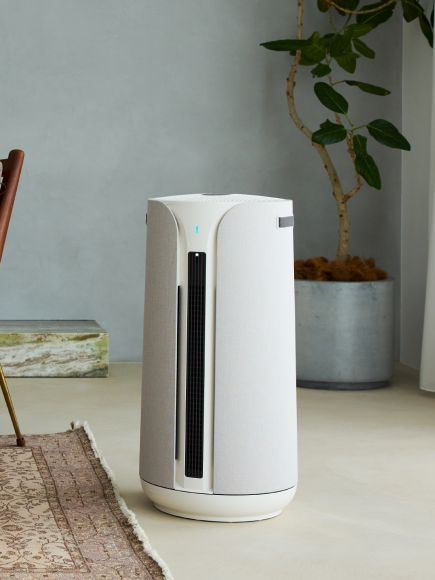
Placing an air purifier on the floor works well in many situations, especially for capturing heavier particles. Dust, pet hair, and dander tend to settle toward the ground. A floor-level unit can capture these pollutants before they circulate throughout the room.
Larger units with powerful motors typically perform well from floor level due to strong airflow capacity. The Blue Pure 211i Max, for instance, delivers a CADR of 410 CFM and can rapidly clean spaces up to 674 square feet from floor level. Floor placement also offers practical advantages: greater stability, no need to find furniture to support it, and easier access for filter changes.
If placing the unit on the floor, maintain at least 3 to 4 inches of clearance on all sides. Research shows that moving an air purifier just a few inches from a wall can increase airflow from as little as 5 percent to over 90 percent. Avoid placing it behind furniture, under tables, or near floor-length curtains that could block air intake or output.
Elevated Placement for Better Breathing Zone Coverage

-
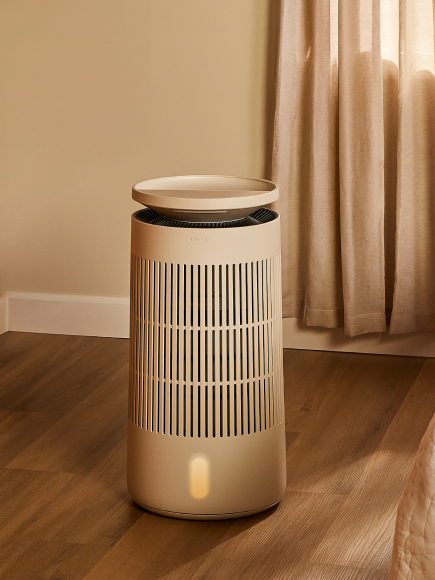
Elevating an air purifier to table height or a dresser can improve performance in specific situations. Positioning it 2 to 5 feet off the ground places it directly in the breathing zone. Most people breathe air from this height range whether sitting, working, or sleeping. An elevated purifier can intercept airborne particles before inhalation.
Elevated placement also captures lighter pollutants that remain suspended in the air longer, including smoke particles, volatile organic compounds (VOCs), fine particulate matter, and airborne bacteria. Compact units like the Blue Pure 511i Max or Blue Pure 511 work especially well on nightstands, desks, or shelves while still delivering powerful air cleaning performance.
When elevating the purifier, ensure the surface is stable and level. Keep the unit away from edges where it could be knocked over. Maintain 3 to 4 inches of clearance around the unit for proper airflow.
Bedroom Placement Strategy for an Air Purifier

-
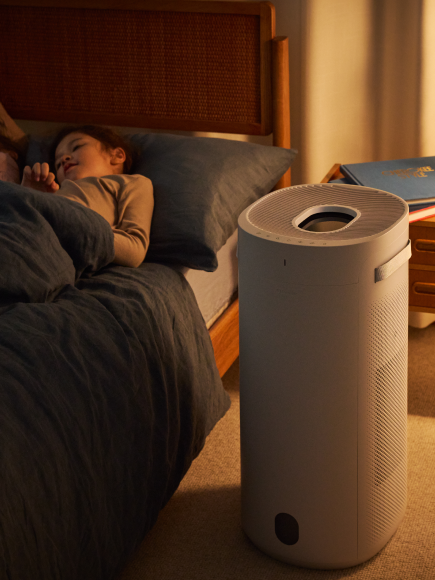
Bedrooms deserve special attention since people spend 6 to 8 hours sleeping in these spaces. Clean air during sleep can improve rest quality and reduce morning congestion. [When deciding where to place an air purifier in the bedroom, it’s important to consider airflow, breathing zone coverage, and distance from the bed.Position the air purifier 6 to 10 feet from the bed when possible. If space is limited, placing it on a nightstand or dresser within the breathing zone works well.
Point the air intake toward the sleeping area so the air around the bed gets filtered first. Avoid having the airflow blow directly on the face, which can be disruptive. Choose a unit with quiet operation for uninterrupted sleep. Blueair purifiers featuring HEPASilent™ technology operate up to 67 percent quieter than traditional HEPA purifiers, making them ideal for bedrooms without disturbing rest.
For added comfort during sleep, consider pairing your purifier with proper humidity levels. The 2-in-1 Pro Purify + Humidify combines air purification with humidification technology, addressing both air quality and moisture levels in a single unit.
Living Room Placement Strategy for an Air Purifier

-
Living rooms present unique challenges due to size and multiple pollution sources. Position the unit near seating areas where family members spend the most time. If specific pollution sources exist, like a fireplace, cooking area, or pet zones, placing the purifier nearby helps capture particles at the source.
Central placement often works best for larger living spaces, allowing clean air to distribute throughout the room. Mid-range models like the Blue Pure 311i Max handle rooms up to 439 ft² effectively, while the Blue Pure 311i+ Max extends coverage to 525 ft² with added voice control features. Avoid tucking the unit into corners or behind furniture where airflow becomes restricted.
General Placement Principles for Air Purifier
Regardless of floor or elevated placement, certain principles maximize effectiveness everywhere in the home.
Keep 3 to 5 feet of open space in front of the air purifier and at least 3 to 4 inches on all other sides. Walls, furniture, and curtains that block airflow reduce efficiency significantly. Close doors and windows in the room where the unit operates. Air purifiers work best in enclosed spaces. Open windows allow outdoor pollutants to continuously enter, making the purifier work harder without fully cleaning the air.
Position the unit near pollution sources when known. If dust or allergens originate from a pet bed, kitchen, or entryway, placing the purifier nearby helps capture particles before they spread. A properly sized air purifier with adequate CADR for the room matters more than finding the perfect spot. The right unit size will clean the air effectively, even if placement is not ideal.
FAQs
Should I put my air purifier on the floor or a table?
Both options work depending on the situation. Floor placement is effective for capturing dust and pet dander, while elevated placement targets the breathing zone more directly. The most important factor is maintaining adequate clearance around the unit for proper airflow.
How far should an air purifier be from the wall?
Keep the unit at least 3 to 4 inches from walls on all sides. For optimal performance, maintain 3 to 5 feet of open space in front of the unit where the air intake or output is located.
Can I put an air purifier in a corner?
Corners restrict airflow from multiple directions, reducing efficiency. If corner placement is necessary, pull the unit several feet away from both walls to allow adequate air circulation.
Where is the best place for an air purifier in a bedroom?
Place the bedroom unit 6 to 10 feet from the bed, either on the floor or elevated on a nightstand or dresser. Position the air intake toward the sleeping area and avoid directing airflow directly at the face.
Does an air purifier need to be in the center of a room?
Not necessarily. While central placement can help air circulation in large spaces, placement near seating areas or pollution sources often provides better results. Focus on adequate clearance and proximity to where time is spent rather than exact center placement.
How does room layout affect air purifier placement?
Open floor plans allow one high-capacity purifier to serve multiple connected areas. Homes with separate rooms and closed doors benefit from multiple units or strategic placement in the most-used spaces. Smaller bedrooms may need compact, efficient models while larger living areas require units with higher CADR ratings.