













-
Salmon dinner on Tuesday. The smell was still in the hallway on Thursday. Cooking odors, pet smells, and smoke do not float away on their own. The molecules responsible, called volatile organic compounds (VOCs), are gases that standard particle filters cannot catch. Activated carbon is what actually traps them.
Here is how the technology works, what to look for in a carbon filter air purifier, and how to pick the right one.
Why Odors Linger So Long Indoors
Opening a window sometimes helps, but indoor air is more complex than that. According to the U.S. EPA, concentrations of many VOCs are consistently 2 to 5 times higher indoors than outdoors.
Common indoor odor sources include cooking (fish, garlic, fried foods), pets (dander, saliva, urine proteins), smoke (cigarettes, candles, wildfires), and cleaning products that actually add VOCs rather than removing them. Particle-based filtration catches dust and pollen but does not address gases. For odor removal, a filter designed to capture molecules is needed.
How Activated Carbon Filters Actually Work
Activated carbon is a highly porous material processed to have an enormous internal surface area, giving it extraordinary capacity to trap gas molecules through a process called adsorption.
During adsorption, VOC molecules bond to the carbon surface as air passes through the filter. The odor-causing compounds are captured and held rather than recirculated back into the room. Over time, as the carbon becomes saturated, the filter needs replacement, which is a normal part of upkeep.
Odors that activated carbon handles well include cooking smells, pet odors, tobacco and wood smoke, chemical fumes from paint or new furniture, and general musty or stale indoor air.
What to Look for in a Carbon Filter Air Purifier

-
Not all air purifiers with carbon filters are equal. A thin carbon pre-filter layer does very little for serious odors. Effective odor control requires a meaningful amount of activated carbon, a high air change rate for the room size, and a combined system that handles both gases and particles at the same time.
Carbon filter quality and quantity
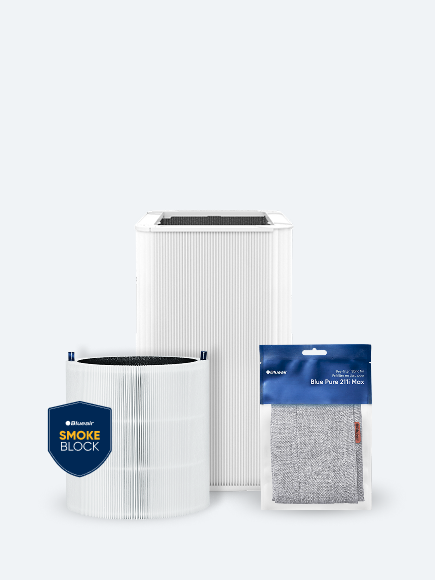
More carbon means more adsorption capacity. A purifier that specifies the type and role of its carbon filtration, not just a generic "carbon layer," is a better bet for real odor problems. Blueair's SmokeBlock filters, for example, contain 2x more activated carbon than the standard Particle + Carbon filter and remove up to 99.99% of wildfire smoke particles.
Air changes per hour
For odor-heavy rooms like kitchens or living rooms with pets, a purifier rated to deliver at least 4 to 5 air changes per hour in the room size is the right target. Matching CADR to room square footage is the most reliable way to check whether a unit has enough power.
Combined particle and odor filtration
Odors often come alongside particles. Pet smells, for example, involve both airborne dander and gas molecules. A purifier that handles both simultaneously gives cleaner air overall. HEPASilent™ technology combines electrostatic and mechanical filtration to capture 99.97% of airborne particles down to 0.1 microns, while the carbon layer addresses gases and odors, making the combination particularly effective for homes with pets or frequent cooking.
How Blueair Handles Odor Contro

-
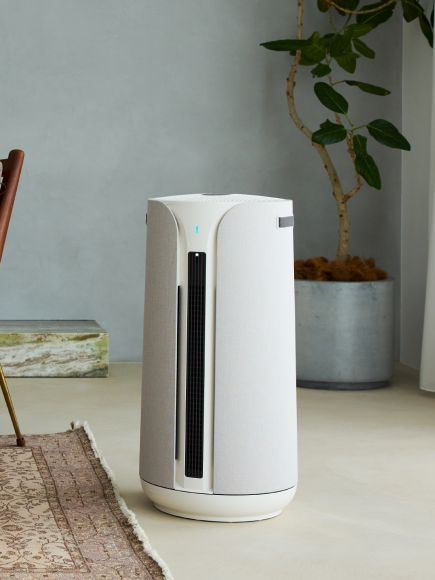
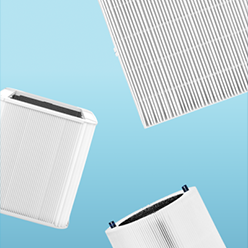
Blueair's Blue Pure Max lineup offers three filter types, each built for a different kind of air quality challenge.
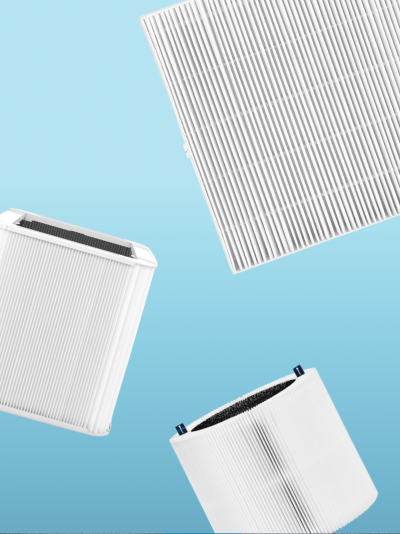
- Particle + Carbon is the standard filter. Removes allergens and traps light household odors from cooking, pets, and everyday life.
- SmokeBlock doubles the activated carbon for heavier odor problems like wildfire smoke, deep-frying, and tobacco. For persistent cooking smells or strong pet odors, SmokeBlock is the most practical upgrade.
- AllergenBlock focuses on trapping and neutralizing dust, pollen, and pet dander, making it the better pick when particles are the main concern rather than smell.
Genuine Blueair replacement filters are available for every model, and a filter subscription saves 15% on every delivery.
Why continuous operation matters for odors
VOCs do not arrive in one burst and stop. Cooking, pets, and household materials release them around the clock. A purifier left off between uses lets odor compounds accumulate before filtration even begins. Keeping a Blueair unit running on a low, quiet setting gives the carbon filter steady exposure to those gases, which is far more effective than blasting it on high for an hour and turning it off.
HEPASilent™ technology makes that approach practical. Delivering up to 45% more clean air than typical HEPA filtration, many Blueair models use less energy than a lightbulb even when running all day.
When dry air makes odors worse
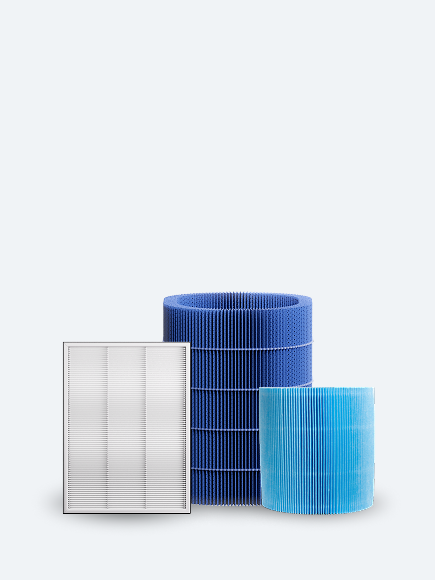
Dry indoor air, common in winter, can actually amplify how strongly odors are perceived. For homes dealing with both air quality and humidity concerns, Blueair's 2-in-1 Pro combines HEPASilent™ air purification with InvisibleMist™ humidification, removing 99.97% of airborne particles while maintaining optimal moisture levels. Co-created with dermatologists, DermaSense™ Smart Skin mode optimizes humidity for skin and respiratory comfort.
Placement Tips for Maximum Odor Removal

-
Where an air purifier sits makes a real difference in how quickly odors clear.
- Kitchen or open-plan living areas. Place the purifier near but not directly next to the stove, where airflow can help intercept cooking odors before they spread. A medium-room purifier handles most kitchens well.
- Pet areas. Position the unit near where pets sleep or spend the most time, right where dander and odor originate.
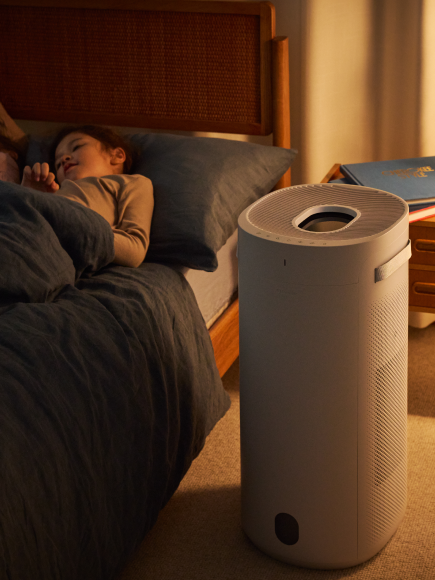
- Bedrooms. A purifier running overnight on a quiet setting handles lingering smells while you sleep.
- Whole-home coverage. For larger homes, one unit per key room is more effective than relying on a single purifier to handle everything. Blueair makes purifiers sized from small rooms up through extra-large spaces.
FAQs
How long does an activated carbon filter last?
Most activated carbon filters need replacement every 6 to 9 months, depending on usage and odor levels. Homes with heavy cooking, multiple pets, or smokers will go through filters faster. After installing a new filter, press and hold the fan speed button for 15 seconds to reset the indicator. Model-specific instructions are at Blueair support.
Can an air purifier remove cooking smells completely?
A purifier with a quality carbon filter significantly reduces cooking odors, especially when running during and after cooking. Run the purifier on a higher setting while cooking and continue for an hour or two afterward to clear remaining VOCs.
Will an air purifier help with pet odors?
A purifier with both particle filtration and activated carbon addresses pet odors from two angles: capturing dander and adsorbing gaseous odor compounds. Running it continuously where pets spend time is the most effective approach. Blueair's guide on nontoxic, pet-safe odor solutions covers more strategies.
Is activated carbon the same as activated charcoal?
Yes. The terms are used interchangeably. Both refer to the same carbon-based material processed to maximize internal surface area for adsorption.
How can you tell when a carbon filter needs replacing?
The clearest sign is a gradual return of noticeable smells even with the purifier running. Many Blueair models include filter replacement reminders, but if odors start lingering again, that is a reliable signal that the carbon is saturated and replacement is due.
Clean, odor-free air at home does not require anything complicated. The right purifier with genuine carbon filtration, placed well and run consistently, handles the rest. Browse Blueair air purifiers and pick the right fit for your space.