











-
An air purifier for dust works by drawing room air through a HEPA or HEPASilent™ filter that captures particles across the full dust size range, from large visible debris down to PM2.5 fine particles at 0.1 microns. The filter traps dust before it can settle on surfaces or enter the breathing zone. Run consistently on auto mode, a correctly sized air purifier measurably reduces how quickly dust re-accumulates on furniture and how many fine particles circulate in a room. The best air purifiers for dust combine high CADR, true HEPA or HEPASilent™ filtration, and a washable pre-filter that extends filter life in high-dust environments. Blue Air's DustMagnet™ technology and HEPASilent™ filters capture particles down to 0.1 microns , smaller than any household dust particle, while operating quietly enough for continuous use in bedrooms and living spaces.
Do Air Purifiers Actually Work for Dust?
Yes. Dust particles range widely in size, from larger visible clumps to PM2.5 fine particles that are invisible but easily inhaled. A true HEPA or HEPASilent™ filter captures particles across that entire range. Regular dusting and vacuuming are still necessary, but a good air purifier running consistently in a room significantly reduces how quickly surfaces re-accumulate dust and how many fine particles circulate in the breathing zone.
The key variables are CADR (how fast the unit cleans air), room coverage, and continuous operation. An air purifier running only occasionally cannot keep up with a constantly generating dust load.
The Best Air Purifiers for Dust
Pick #1: Blue Pure 211i Max, Best for Large Dusty Rooms

-
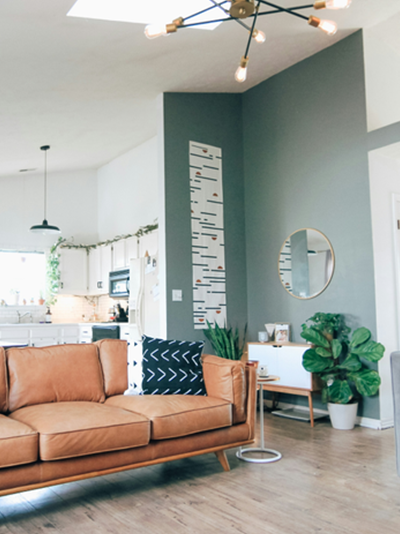
For living rooms, open-plan spaces, and large bedrooms where dust builds up fast, the Blue Pure 211i Max is the strongest performer. A CADR of 410 CFM and coverage of 674 ft² in 12.5 minutes, 1,618 ft² in 30 minutes, & 3,235 ft² in 1 hour means the entire air volume in a large room cycles through filtration multiple times each hour. HEPASilent™ technology captures particles down to 0.1 microns, well below the size range of any household dust particle.
PM1, PM2.5, and PM10 sensors monitor real-time particle levels, and auto mode adjusts fan speed based on actual conditions. After cleaning, during cooking, or when kids come home from school, tracking in outdoor particles, the unit ramps up automatically. Five fan speeds, Alexa and Google voice control, and a color-coded AQI display round out the package.
Pick #2: Blue Pure 311i+ Max, Best for Mid-Size Rooms and Pet Hair

-
Homes with pets generate additional dust from dander and fur. The Blue Pure 311i+ Max handles dust and pet-related particles across rooms up to 525 ft² in 12.5 minutes, 1,260 ft² in 30 minutes, & 2,520 ft² in 1 hour, with a CADR of Pollen 446 cfm, Dust 370 cfm, Smoke 339 cfm. GermShield technology adds protection against bacteria that can build up in pet-heavy environments. Upgrading to the AllergenBlock filter adds targeted performance against dust and dander.
Auto mode, app control, and Alexa and Google voice control are all included. The washable fabric pre-filter catches pet hair and large dust particles before they reach the main HEPASilent™ filter, which helps extend filter life in dusty environments.
Pick #3: Blue Pure 311i Max, Best Value for Dust Control

-
Coverage of 439 ft² in 12.5 minutes, 1,054 ft² in 30 minutes, & 2,107 ft² in 1 hour with a CADR of Pollen 365 cfm, Dust 314 cfm, and Smoke 283 cfm at $189.99 makes the Blue Pure 311i Max an excellent value option for average-sized rooms. All the core features are included: auto mode, PM2.5 sensor, app control, and night mode. For a guest bedroom, home office, or mid-size living space where dust is the main concern and budget matters, the performance-to-price ratio is strong.
Pick #4: Blue Signature, Best for Highly Dust-Prone Homes

-
For home renovations, high-traffic households, or anyone who genuinely struggles with dust accumulation regardless of how often cleaning happens, the Blue Signature goes further. Seven stages of filtration, a CADR of 434 CFM for dust, and coverage of 705 ft² in 12.5 minutes & up to 3,385 ft² in 1 hour. OdorFence Technology also handles the musty, stale smell that often accompanies heavy dust accumulation. A patent-pending filter design doubles filter lifetime compared to previous models.
Pick #5: Blue Pure 511i Max, Best for Bedrooms

-
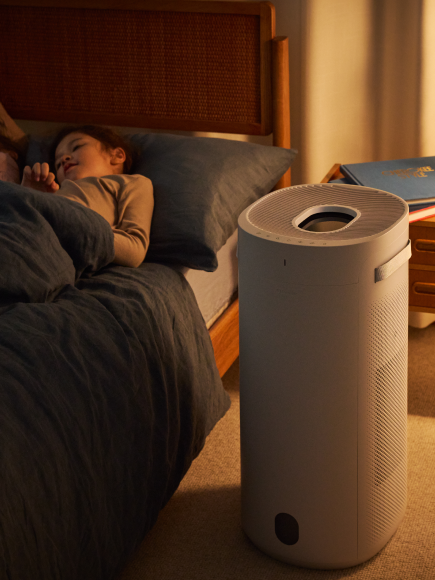
For a dusty bedroom under237 ft² in 12.5 minutes, 569 ft² in 30 minutes, & 1,138 ft² in 1 hour, the Blue Pure 511i Max is the right scale. A CADR of Pollen 174 cfm, Dust 159 cfm, Smoke 153 cfm, a starting noise level of 19 dB, and all smart features in a compact, rounded form factor. The unit runs quietly through the night, so the breathing zone stays cleaner during the hours of sleep.
What Else Helps with Dust Beyond an Air Purifier
- Run the unit continuously on auto mode. Dust is constantly being generated in any lived-in home. Setting an air purifier to run on auto around the clock, letting the unit throttle itself based on real-time particle levels, is more effective than running at high speed for a few hours. Energy use in auto mode is typically minimal.
- Wash the pre-filter regularly. On Blueair models, the outer fabric pre-filter catches the largest dust particles, pet hair, and lint. Washing the pre-filter regularly (check the user manual for model-specific care instructions) keeps the HEPASilent™ filter from clogging prematurely and maintains better airflow overall.
- Vacuum with a HEPA-filter vacuum. Standard vacuum cleaners can exhaust fine dust particles back into the air. A vacuum with HEPA filtration captures them instead. Running an air purifier for dust in the room during vacuuming helps catch anything that gets stirred up, and surfaces stay cleaner longer as a result.
- Reduce dust-trapping surfaces. Heavy curtains, wall-to-wall carpeting, and lots of decorative items all trap and re-release dust continuously. Hard floors, washable rugs, and minimal soft surfaces reduce the home's dust load even before the air purifier gets involved.
- Replace filters on schedule. A HEPA filter that is fully loaded can no longer capture new particles effectively. Blueair's RealTrack Technology gives an accurate replacement estimate based on actual usage and pollution levels, and a filter subscription saves 15% on every replacement. Filters should typically be replaced every 6 to 9 months in a dusty home.
According to the EPA, indoor air can contain a complex mix of pollutants that contribute to health effects ranging from short-term irritation to long-term respiratory issues. Proper filtration is one of the primary tools for reducing indoor particulate exposure.
Quick Guide by Room and Need
Room or Situation
Best Pick
Large living room or open plan
Blue Pure 211i Max
Mid-size room with pets
Blue Pure 311i+ Max
Mid-size room, budget-focused
Blue Pure 311i Max
Highly dust-prone home, large space
Blue Signature
Bedroom under 250 sq ft
Blue Pure 511i Max
An air purifier will not eliminate dust, but pairing a properly sized HEPA air purifier with regular vacuuming makes a visible difference within a few days. Surfaces stay cleaner longer, and the air itself feels noticeably lighter. For help choosing the right model for a specific room, the Blueair guided selling tool walks through the key questions in about a minute.
FAQs
Do air purifiers really help with dust?
Yes. HEPA air purifiers capture airborne dust particles effectively. You'll notice less dust settling on surfaces over time, especially with continuous use and a model sized properly for your room.
What CADR rating do I need for a dusty room?
Match CADR to room size for at least 4-5 air changes per hour. For a 300 sq ft room, a CADR of around 150-200 CFM is adequate. Larger or dustier rooms benefit from higher CADR.
Can an air purifier replace dusting?
No. Air purifiers capture airborne particles, not settled dust. You'll still need to dust surfaces, but less frequently. Pairing an air purifier with regular surface cleaning gives the best results.
Why does my house still have dust with an air purifier?
An air purifier only catches particles while they're airborne. Settled dust on surfaces needs to be disturbed before the purifier can capture it. Running it continuously and cleaning surfaces regularly addresses both.
How often should I clean the pre-filter on my air purifier?
Every 2-4 weeks for most households, or more often if you have pets. For dusty environments (near construction, multiple pets, heavy carpet), weekly pre-filter cleaning keeps performance at its best.
Is a higher CADR always better for dust?
Higher CADR is better for larger rooms. For a small bedroom, a CADR matched to the room size is adequate. Oversized units cost more and aren't necessary if the room coverage is correct.