













-
What Makes Smart Air Purifiers Cost More Than Basic Models
Anyone shopping for an air purifier sees the same problem: prices jump when you add smart features. A basic purifier might cost $100. Add WiFi, sensors, and app control, and you are looking at $300 to $600. The question is simple: does the extra money actually get you something useful?
Not every smart feature matters. Some genuinely improve your life. Others sound impressive but do nothing practical. This guide shows which features solve real problems and which ones just look good on the marketing materials.
Does Advanced Filtration Actually Work Better Than Basic HEPA

-
Before worrying about smart stuff, the core job matters most: can the purifier actually clean your air. A smart purifier that cannot filter well is completely useless.
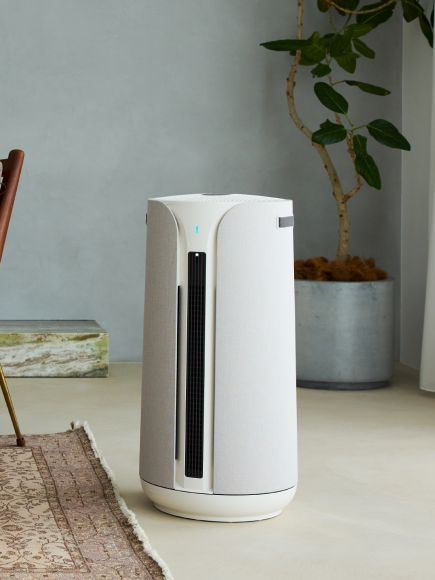
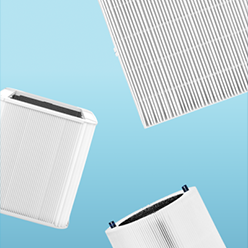
Most older purifiers use plain mechanical HEPA filters. Air gets forced through very dense material, and particles get trapped. This works, but it requires a lot of pressure and power. Newer purifiers mix mechanical and electrostatic filtration. Blueair calls this HEPASilent™ technology. The combination removes 99.97% of particles as small as 0.1 microns, including viruses, bacteria, pollen, dust, and pet dander.
The practical difference shows up in real numbers. HEPASilent™ technology delivers higher CADR (Clean Air Delivery Rate) performance than mechanical-only filtration at the lower noise level and power consumption. The Blue Pure 211i Max cleans 635 square feet in just 12.5 minutes. Basic HEPA filters cannot match that speed.
So if air quality problems exist at home, filter quality decides whether you actually get better air or just waste money.
Does a WiFi Air Purifier Actually Save You Time and Money

-
A wifi air purifier sounds like a luxury. But look at how people actually use purifiers, and the benefits become clear. WiFi connectivity means you control your purifier from your phone, from anywhere.
Real examples: Your bedroom purifier can start running 15 minutes before you get home, so the air is fresh when you arrive. You can schedule it to run automatically before bed each night without touching it once. You get phone alerts when filters need replacement, whether you are at work or on vacation.
The Blue Pure 211i Max and Blue Pure 311i+ Max both offer full WiFi and app control. Real-time monitoring shows PM1, PM2.5, and PM10 levels. You can set custom schedules, track outdoor air quality, and get filter replacement alerts on your phone.
Who actually needs this. WiFi air purifier control makes sense if you work long hours, manage multiple rooms, or care about cutting your power bill. If your purifier sits in one location and you adjust it once per week, the extra cost does not justify the feature. Simpler models work fine for that situation.
Check the Blue Pure 311i Max and Blue Pure 211i Max to see models with WiFi so you can compare.
Does an Air Quality Sensor Justify the Price Premium

-
An air quality sensor separates smart purifiers from basic ones. A standard purifier runs at the same speed all the time. A smart purifier with a good sensor responds to what is actually happening in your room.
Good sensors detect three main things:
Tiny Particles (PM2.5 and PM10): Small particles get deep into lungs and cause respiratory issues, especially for people with asthma or allergies. Real sensors show what is actually in your air instead of you guessing.
Harmful Gases (VOCs): Furniture, paint, and common products release invisible gases. Sensors can spot these and tell your purifier to work harder.
Humidity and Temperature: Keeping humidity between 40-60% helps you breathe easier and stops dust mites and mold. Knowing actual levels helps you maintain a healthier space.
The Blue Pure 311i Max includes integrated PM2.5 sensors that directly control how hard the purifier works. Sensor data feeds into the most valuable smart feature: auto mode.
Does Voice Control Add Real Value or Just Sound Cool
Voice control through Alexa or Google Home seems nice to have. In practice, it matters if you actually use voice commands in your home.
The Blue Pure 311i+ Max works with both Alexa and Google Home. You can say "Alexa, turn on the purifier" or "Hey Google, increase the fan." This means one less thing to find on your phone or adjust manually.
For people with mobility issues or those managing multiple devices, voice control saves genuine effort. For others, it is simply a convenience feature. Not essential, but useful if you already use smart speakers.
How Do You Compare Purifiers for Different Room Sizes
Room size is crucial. A purifier that is too weak for your space will run constantly and still not clean the air. A purifier too powerful for your space wastes energy and costs more than necessary.
The rule of thumb: a purifier should provide three air changes per hour (ACH). For a 300 square foot room with 8-foot ceilings, you need at least 120 CADR. The Blue Pure 311i Max with 250 CADR comfortably handles 387 square feet. The Blue Pure 211i Max with 410 CADR handles large open living areas up to 635 square feet.
Matching purifier size to your space is more important than any smart feature. An undersized smart purifier still does not solve your air quality problem.
Which Air Purifier Is Worth Buying Right Now

-
The answer depends on your specific needs and budget.
For small spaces under 400 square feet. Check the Blue Pure 511i Max for compact bedroom solutions, or try the ComfortPure 3-in-1 DH3i if you need integrated heating and cooling. The DustMagnet™ at $169.99 offers apartments and offices excellent value with 141 CADR, WiFi connectivity, and auto mode. Filters last 6-9 months.
Why it works: smart features meet practical performance at a price point that does not break the bank.
For medium spaces 400 to 700 square feet. The Blue Pure 311i Max at $249.99 represents the sweet spot for most households. At 250 CADR, it cleans large living areas effectively. The choice between this and the 311i+ Max depends on whether voice control matters to you.
The decision: if you already use Alexa or Google Home, the 311i+ Max at $299.99 makes sense. Otherwise, the standard 311i Max gives you 95% of the value at lower cost.
For large spaces over 700 square feet. The Blue Pure 211i Max at $349.99 stands as the premium choice. Its 410 CADR handles open-concept living areas. Features like PM1, PM2.5, and PM10 monitoring provide comprehensive air quality information. The 46W energy consumption on high speed remains efficient compared to other purifiers in this performance level.
Multiple reviewers, including Wirecutter, specifically praised this model for combining powerful performance with practical design, confirming that premium pricing reflects genuine capability.
Compare all options with the Blue Pure 211i Max, Blue Pure 311i Max, and Mini Restful side by side.
What Features Should You Prioritize When Comparing Models
Choose in this order of importance:
First: Correct CADR for your space. A beautiful purifier with weak performance solves nothing. Match the CADR to your room size using the three air changes per hour rule.
Second: Quiet operation. Noise between 23-50 dB allows normal conversation. Anything above 50 dB becomes annoying in bedrooms or offices. If a purifier runs constantly because it is too weak, the noise becomes a real problem.
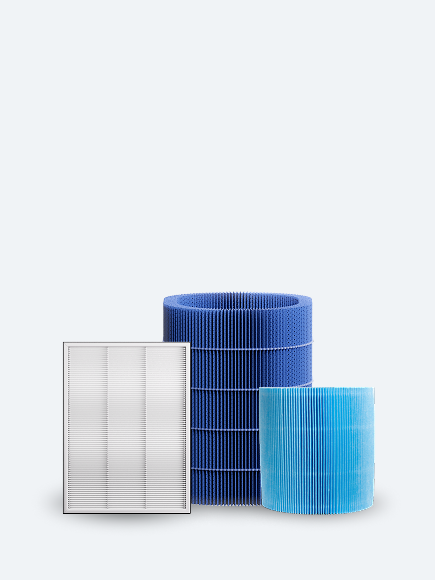
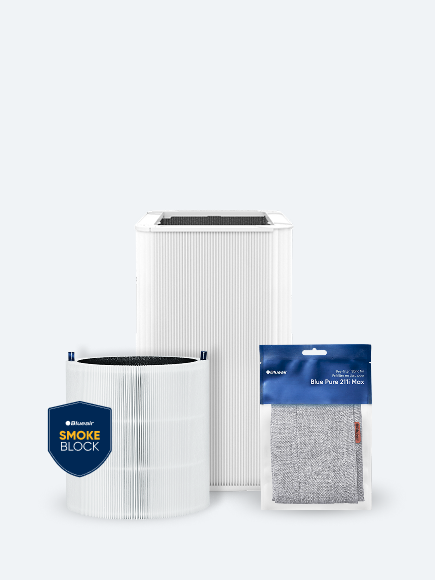
Third: Filter costs and replacement frequency. Some purifiers demand expensive filters every three months. Good models stretch filters to 6-9 months. Blueair filters cost $29.99-$50 depending on the model.
Fourth: Fit your lifestyle. You will use your purifier more if it matches your space and how you actually live. Compact models like the Blue Pure 511i Max at 4.2 lbs move between rooms easily. Larger units serve as focal points in living spaces.
Fifth: Smart features that match your needs. If you are rarely home, WiFi control matters less. If you manage allergies, real-time air quality monitoring becomes more valuable.
Explore the Blue Pure 311i Max to see how integrated sensors control performance in real-time.
Are Smart Air Filters Actually Worth the Price Premium
The honest answer: partially yes.
Smart features cost approximately $50-100 more than equivalent mechanical-only purifiers. Premium pricing makes sense if you actually use the features, particularly auto mode and real-time monitoring. Someone who checks the app daily and adjusts based on air quality gets measurable value.
But if smart features gather dust while your purifier runs on manual mode, you overpaid. A non-smart purifier with better filtration beats an underutilized smart purifier every time.
The value calculation: auto mode alone saves $20-30 annually in electricity costs. Over 5-7 years, the typical purifier lifespan is $100-210 in energy savings, potentially offsetting the premium cost of smart features.
Smart features are worth paying for if:
- You want convenience and do not want to manually adjust the device
- You care about energy efficiency and lower power bills
- You have multiple spaces and want centralized control
- Your lifestyle benefits from remote monitoring
Smart features are not necessary if:
- Budget is your primary concern and basic purification solves your air quality issues
- You prefer simplicity and minimal technology
- You plan minimal use, only activating when needed
Compare smart and traditional options by checking the Blue Pure 211i Max for core purification and the 2-in-1 Pro Purify + Humidify for multi-function needs.
How Smart Features Work in Real Life Situations
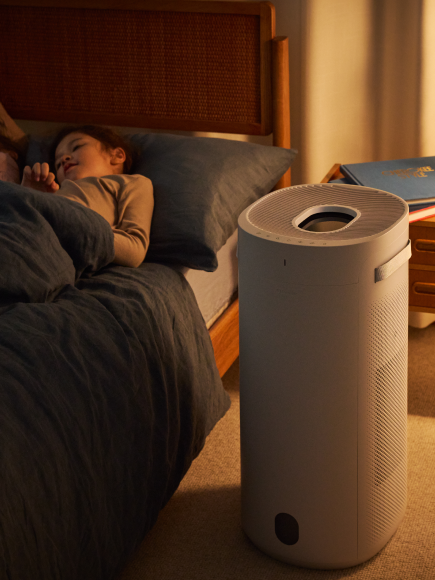
Auto mode in practice: A bedroom runs the Blue Pure 311i Max in auto mode. At night when air quality is good, the purifier operates at fan speed 1, consuming 10W and producing 23 dB, basically inaudible. When cooking occurs on an adjacent floor and odors infiltrate, the air quality sensor detects PM2.5 spikes, and auto mode shifts to fan speed 3-4, consuming 25-30W and producing 35-40 dB. After cooking finishes and air quality recovers, the purifier automatically returns to low speed.
Compare this to manual mode, where the purifier runs perpetually at maximum speed (60W, 50 dB, maximum noise and electricity waste) or requires remembering to adjust speeds throughout the day.
WiFi air purifier and app control in real situations: The Blue Pure 211i Max app connectivity becomes particularly useful when traveling. Returning from a weekend trip with concerns about stale air accumulation, you activate the purifier remotely 30 minutes before arriving home, ensuring fresh air upon arrival. The app simultaneously displays outdoor air quality readings, helping determine whether to open windows or rely solely on the purifier.
For allergy sufferers, receiving air quality alerts enables proactive management, taking medication preventatively when sensors detect pollen spikes rather than reactively after symptoms begin.
What Does the Science Say About Smart Air Purifier Features
Research from Harvard T.H. Chan School of Public Health found that workers in environments with higher air quality showed measurably improved cognitive function with benefits including faster response times and better decision-making. While this research does not exclusively address smart features, it underscores that investing in genuinely effective air purification matters.
According to the EPA's Residential Air Cleaners: A Technical Summary, CADR ratings provide the most reliable metric for evaluating purifier effectiveness. The scientific testing protocol (GB/T18801-2015) ensures consistent evaluation across manufacturers, making CADR the feature to prioritize over marketing claims.
The combination of HEPASilent™ technology with intelligent sensor-based auto mode addresses what the National Institutes of Health identified as critical in hospital settings: simultaneously reducing noise while maintaining particle removal efficiency. This principle applies equally to residential spaces where occupants spend 16 plus hours daily.
Making Your Final Decision
Smart air purifiers solve real problems when you match the right features to your needs. The purifier that is right for you is not the one with the most features or the highest price, but the one that solves your specific air quality problem while fitting your budget and lifestyle.
A weak smart purifier with impressive app control still leaves you with bad air. A powerful basic purifier with no connectivity solves your air quality problem just fine. Match your priorities to your situation, and you will make a purchase you actually value.
FAQs
Which air purifier is worth buying for my space?
Size matters most. Measure your room square footage and choose a CADR accordingly. The Blue Pure 411i Max works for under 400 square feet, the 311i Max for 400-700 square feet, and the 211i Max for 700 plus square feet. Within your size range, choose based on budget and whether WiFi features matter to you.
What features should you look for?
Prioritize proper CADR for your space, quiet operation under 50 dB, reasonable filter costs and replacement frequency, and smart features that match your actual lifestyle.
Are smart air filters actually worth it?
Yes, if you use them. Auto mode and real-time monitoring deliver genuine value through energy savings and convenience. No, if you rarely interact with the app and let smart features go unused.
What should you avoid when buying?
Avoid undersized purifiers regardless of smart features, unnecessary gimmick features, and buying without checking warranty details. Focus on CADR rating and filter costs before considering smart features.
Explore the 2-in-1 Pro Purify + Humidify and Blue Pure 211i Max to compare comprehensive solutions with complete specifications.
Bibliography and Scientific References
- EPA (2008). Residential Air Cleaners: A Technical Summary. 3rd Edition.
- Harvard T.H. Chan School of Public Health (2015). Green Office Environments Linked with Higher Cognitive Function. October 2015.
- National Institutes of Health (2019). Mapping sources of noise in an intensive care unit. August 2019.
- GB/T18801-2015 Standard. Particulate Matter CADR testing protocol for air purification devices.
- Blueair Medical White Paper (2016). Providing Clean Air and Peace of Mind for Your Patients, Providers, Staff, and Others. Internal testing documentation on HEPASilent™ technology performance.
- Blueair Technical Documentation. HEPASilent™ Technology Performance Data. Comparative CADR analysis with mechanical-only filtration.