











-
Allergy triggers do not stay outside. Pollen drifts in through open windows and on clothing. Dust mites live in every bedroom. Pet dander floats through every room a pet enters. And mold spores build up in humid corners throughout the house. A good air purifier makes a real dent in all of that. Here are the best options in 2026, matched to different situations and room sizes.
What Makes an Air Purifier Good for Allergies?
A few things separate a genuinely effective allergy air purifier from one that just moves air around.
True HEPA or HEPASilent™ filtration is the baseline. Standard HEPA filters capture 99.97% of particles sized 0.3 microns and larger. Most common allergens fall well within that range: pollen (10 to 100 microns), pet dander (2.5 to 10 microns), dust mite debris (0.5 to 50 microns), and mold spores (1 to 100 microns). Blueair's HEPASilent™ technology captures particles down to 0.1 microns using a combination of mechanical and electrostatic filtration, which means finer particles are captured at lower noise and energy levels than mechanical-only HEPA designs.
CADR (Clean Air Delivery Rate) should match the room. CADR tells how quickly the purifier cleans air in cubic feet per minute. A higher CADR in a smaller room means more air changes per hour, which means less time allergens spend floating around. Blueair's AHAM-certified ratings are based on 4.8 air changes per hour, a meaningful benchmark for allergy relief.
Auto mode with PM2.5 sensing matters because allergy triggers are not constant. Pollen spikes at certain times of day, and pet dander levels climb every time the dog shakes. Auto mode adjusts fan speed in response to real-time air quality, so the purifier scales with actual need without running on high around the clock.
The Best Air Purifiers for Allergies
Pick #1: Blue Pure 311i+ Max, Best All-Around for Allergy Sufferers

-
The Blue Pure 311i+ Max is the strongest mid-size option for allergy-focused households. Coverage reaches 525 ft² in 12.5 minutes with a CADR of Pollen 446 cfm, Dust 370 cfm, Smoke 339 cfm, across pollen, dust, and smoke. GermShield technology actively protects the filter surface from bacterial growth even when the unit is off, which is valuable in humid environments where mold and bacteria thrive alongside pollen and dust.
HEPASilent™ filtration removes 99.97% of particles down to 0.1 microns. Upgrading to the AllergenBlock filter adds an extra layer of allergen-specific protection against dust, pollen, and pet dander. Auto mode with PM2.5 sensing, app control, voice control via Alexa and Google Assistant, and a 9-month filter life round out the package.
Pick #2: Blue Pure 211i Max, Best for Large Allergy-Prone Rooms

-
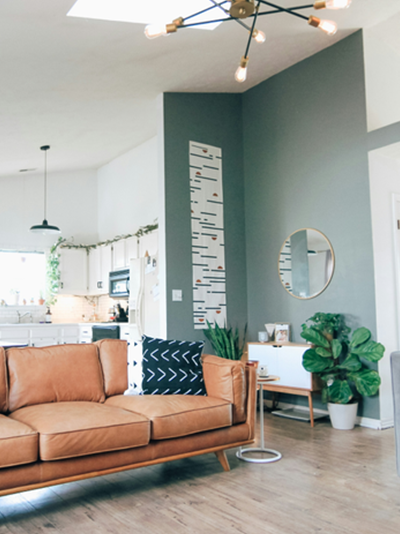
Open-plan living areas, large master bedrooms, and combined living and dining spaces need real power. The Blue Pure 211i Max delivers Pollen 450 cfm, Dust 452 cfm, Smoke 435 cfm CADR, and covers 674 ft² in 12.5 minutes, 1,618 ft² in 30 minutes, & 3,235 ft² in 1 hour. PM1, PM2.5, and PM10 sensors give a detailed picture of what is in the air, tracking not just particle count but particle size as well.
For families where the main allergy triggers are pets and dust in larger shared spaces, the 211i Max is the right scale. Five fan speeds, auto mode, Alexa and Google voice control, and a color-coded AQI display make real-time air quality visible at a glance from across the room.
Pick #3: Blue Pure 311i Max, Best Value for Mid-Size Rooms

-
Coverage of 439 ft² in 12.5 minutes, 1,054 ft² in 30 minutes, & 2,107 ft² in 1 hour, a CADR of Pollen 365 cfm, Dust 314 cfm, Smoke 283 cfm, and all the core smart features, including auto mode, PM2.5 sensing, and app control. The Blue Pure 311i Max skips voice control and GermShield compared to the 311i+ Max, but for a bedroom or mid-size room where the primary goal is reducing pollen and dust, the performance-to-price ratio is hard to beat.
Pick #4: Blue Signature: Best for Whole-Room Allergy Control

-
When serious filtration matters most, the Blue Signature brings seven stages of filtration plus OdorFence Technology to rooms up to 705 sq ft. CADR reaches 455 CFM for smoke, 450 CFM for pollen, and 434 CFM for dust. For large family spaces where multiple allergen sources are at work simultaneously, more filtration stages mean more comprehensive capture. A patent-pending filter design doubles filter lifetime compared to previous models.
Pick #5: Blue Pure 511i Max, Best for Bedrooms and Small Spaces

-
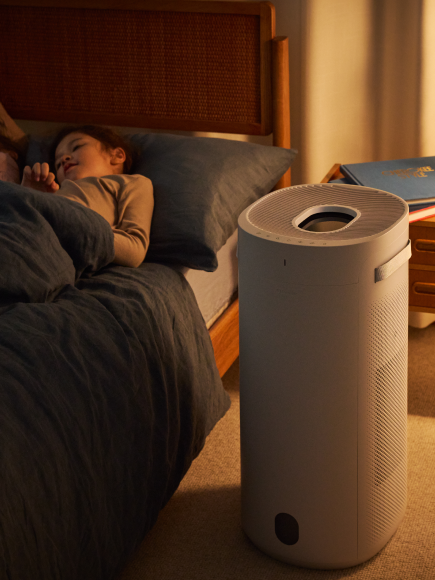
For smaller bedrooms under 237 ft² in 12.5 minutes, 569 ft² in 30 minutes, & 1,138 ft² in 1 hour, the Blue Pure 511i Max keeps things simple and quiet. CADR of Pollen 174 cfm, Dust 159 cfm, Smoke 153 cfm, a compact, rounded design with no sharp edges (safe around kids), and a starting noise level of 19 dB. Runs quietly through the night and covers the sleeping space well. All smart features are included: auto mode, app control, PM2.5 sensor, and night mode.
Getting the Most Out of an Allergy Air Purifier
- Run the unit continuously. Allergens do not take breaks, so the purifier should not either. Auto mode lets the unit dial back when air is clean and ramp up when particles spike, keeping energy use reasonable while maintaining continuous coverage.
- Prioritize the bedroom. The average person spends roughly a third of each day in the bedroom. Bedroom allergen levels directly affect sleep quality and how someone feels in the morning. A HEPA air purifier in the bedroom makes a bigger difference than one running in a room that only gets occasional use.
- Change filters on schedule. A clogged HEPA filter loses effectiveness. Most Blueair Max series models include RealTrack Technology that monitors actual usage and pollution levels, then alerts via app when replacement is due. A filter subscription saves 15% on every replacement and removes the guesswork entirely.
- Pair with regular cleaning. An air purifier captures what is already airborne. Vacuuming with a HEPA-filter vacuum, washing bedding weekly in hot water, and reducing clutter that traps dust all lower the source load the purifier has to manage.
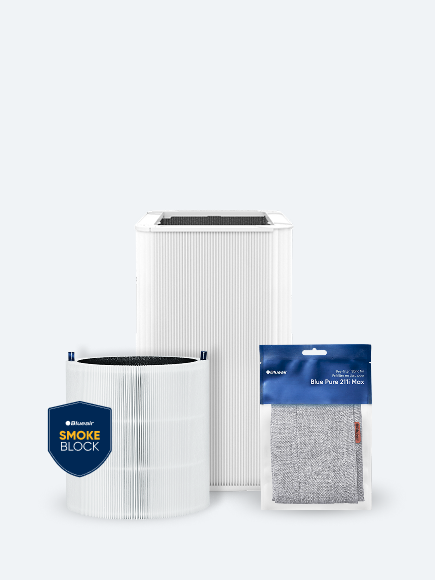
- Consider filter upgrades. The AllergenBlock filter provides extra allergen-trapping capacity beyond the standard Particle + Carbon filter. Worth the upgrade if dust, pollen, or pet dander are primary triggers.
Quick Guide by Situation
Situation
Best Pick
Bedroom under 250 sq ft
Blue Pure 511i Max
Bedroom or office, 250 to 400 sq ft
Blue Pure 311i Max
Mid-size room
Blue Pure 311i+ Max
Large room or open plan
Blue Pure 211i Max
Premium, 700+ sq ft
Blue Signature
More than 100 million people in the U.S. experience various types of allergies each year, according to the Asthma and Allergy Foundation of America. A good air purifier will not eliminate every trigger, but reducing airborne allergen levels in the spaces where allergy sufferers spend the most time is one of the most practical steps anyone can take. For help choosing the right model for a specific space, the Blueair guided selling tool walks through the key questions in about a minute.
FAQs
Do air purifiers actually help with allergies?
Yes, when they use true HEPA filtration. HEPA filters capture pollen, pet dander, dust mite particles, and mold spores, which are the main indoor allergy triggers. Consistent use noticeably reduces allergen exposure.
What CADR do I need for allergy relief?
Match CADR to your room size so the unit achieves at least 4-5 air changes per hour. For a 400 sq ft bedroom, look for a CADR of at least 200-250 CFM minimum.
Can an air purifier help with pet allergies?
Yes. Pet dander is a particle that HEPA filters capture well. Running an air purifier in rooms where pets spend time, and especially in bedrooms, can significantly reduce dander exposure.
Should I run my allergy air purifier 24/7?
Ideally, yes, especially on auto mode. Allergens continually re-enter indoor air from surfaces, clothing, and outdoor sources. Continuous filtration keeps levels consistently low rather than letting them accumulate.
Do air purifiers help with seasonal pollen allergies indoors?
Yes. Pollen enters through open windows, doors, and on clothing. A HEPA air purifier in the bedroom or main living area can significantly reduce the pollen load you're exposed to indoors.
Is there a specific filter type for pet allergy households?
For households with pets, Blueair's AllergenBlock filter is specifically designed to trap and neutralize pet dander alongside dust and pollen. The standard Particle + Carbon filter also captures pet dander effectively.